 CureMyPlants
Tomato Blight: How to Tell Early Blight from Late Blight and Treat Both
Gardeners search for "tomato blight" when they mean two very different diseases. One is common and slow, the other is rare and ruinous, and they need different treatments. Here is how to tell them apart, and exactly what clears each one.
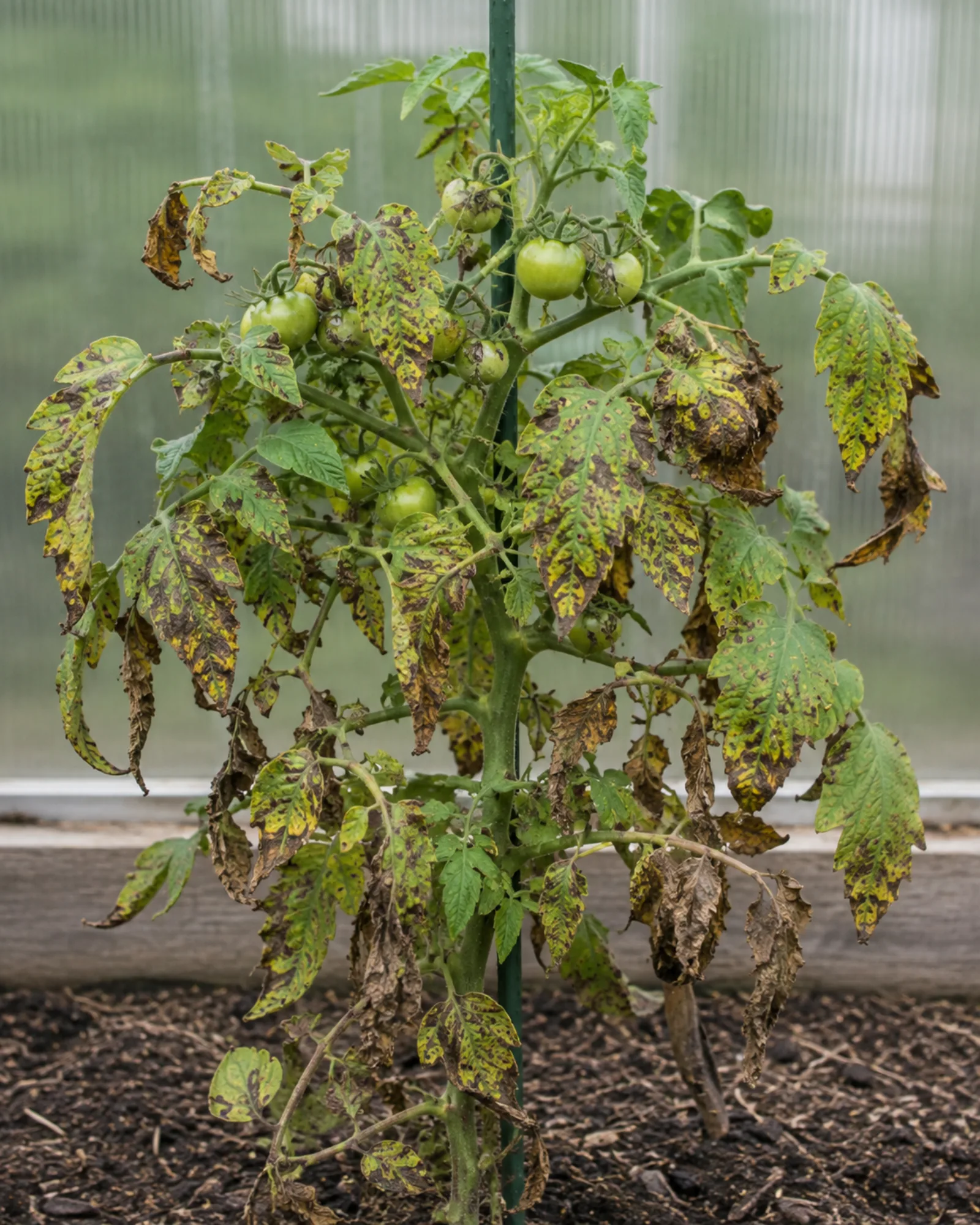
Two diseases at a glance
Your tomato has spots, and someone has told you it is "blight." That single word covers two different diseases with very different stakes. Early blight is the everyday one: it turns up on most tomato patches at some point, it works slowly from the bottom of the plant up, and it is very manageable. Late blight is the notorious one, the same disease behind the Irish potato famine, and once it takes hold in cool wet weather it can flatten a plant in days. Telling them apart is the whole game, because the wrong treatment wastes the short window you have. Below is how to identify each, what causes them, and the treatments and habits that genuinely work.
What each looks like, and how to tell them apart
The fastest way to sort out tomato blight is to ask two questions: where on the plant did the spots start, and what is inside each spot.
Early blight: target rings on the lowest, oldest leaves
Early blight starts low. The first spots appear on the older foliage near the ground, as small brown lesions that grow up to about half an inch across.1 The giveaway is the pattern inside the spot: as the lesion enlarges it develops concentric rings, giving it a bull's eye or target-spot look, and the leaf tissue around each spot usually turns yellow.17 Badly affected lower leaves yellow completely and drop, so the disease climbs the plant from the bottom over several weeks. Early blight can also mark the stems as oval, dry brown areas with dark concentric rings, and the fruit near the stem end with leathery black spots that carry the same raised, ridged rings.1 The real damage is usually the defoliation: as the lower canopy thins out, the plant loses leaf area to feed the crop, and the exposed fruit is more prone to sunscald. On its own, though, early blight rarely kills a healthy tomato outright, which is the key difference in stakes from the disease that follows.
Late blight: greasy blotches with white fuzz underneath
Late blight looks and behaves differently. Instead of small tidy targets, it makes large, irregular blotches, at least the size of a coin, that begin as water-soaked, greasy-looking olive-green areas and quickly turn brown to almost black.27 The blotches are not stopped by the leaf veins, so they spread across the whole leaf.2 In humid weather, look at the underside of the lesion: a thin, powdery white growth appears at the edge of the dead tissue, which is the pathogen producing spores.27 Late blight also attacks the stems and leaf stalks as firm dark-brown lesions, and the fruit as firm, greasy, brown patches, often on the upper shoulders where spores land from above.23 Where early blight nibbles from the bottom, late blight can brown a whole plant top to bottom in a matter of days.
And the common look-alike: Septoria leaf spot
A third disease, Septoria leaf spot, is often mistaken for early blight because it too starts on the lower leaves in warm, wet weather. The difference is in the spots. Septoria makes many small, circular tan-to-grey spots with a dark margin, and inside each one, with a hand lens, you can see tiny black specks (the fruiting bodies, called pycnidia).7 So the quick rule is this: concentric target rings point to early blight, small grey spots peppered with black dots point to Septoria, and large greasy blotches with white fuzz on the underside point to late blight.7
Target rings on lower leaves is early blight. Large greasy blotches with white fuzz on the leaf underside, spreading fast, is late blight, and it is the one to act on urgently.
What causes them and how they spread
Early blight, a soil-borne fungus that waits in debris
Early blight is caused by the fungi Alternaria solani and its close relative Alternaria tomatophila (also written A. linariae), which infect tomatoes, potatoes, peppers and related weeds.1 The fungus overwinters in infected plant debris and in the soil, and it can also arrive on tomato seed or on transplants.1 In spring the spores are splashed and blown up onto the lowest leaves, which is why the disease starts at the bottom of the plant. It gets going in moderate to warm weather, roughly 59F to 80F with an optimum around 82F to 86F, and it needs moisture: wet weather, heavy dew, or relative humidity of 90 percent or more.1 Plants under stress, from drought, poor nutrition or a heavy fruit load, are hit harder, which is why early blight often flares just as the first tomatoes are ripening.
Late blight, an explosive water mold that rides the wind
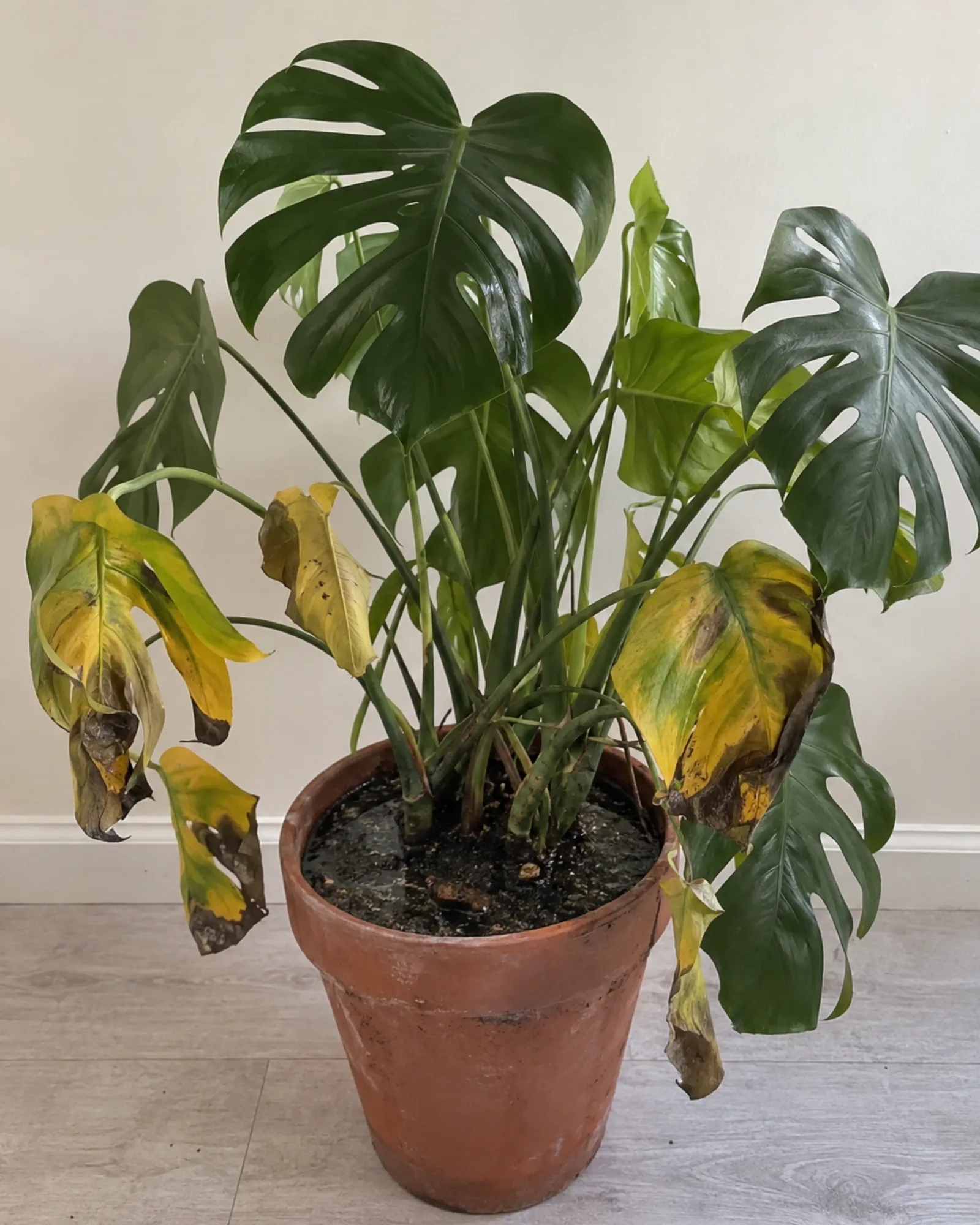
Late blight is not really a fungus at all. It is caused by Phytophthora infestans, a water mold (an oomycete), the same class of pathogen behind root rot in plants like monstera, and that difference matters for how it spreads and how you treat it.2 It thrives in cool, damp conditions, around 60F to 70F with long periods of leaf wetness or humidity above 90 percent, and under those conditions a single lesion can produce thousands of spores in less than five days.23 Those spores (sporangia) are carried on the wind, sometimes for miles, so late blight can appear in a garden that has never grown a diseased plant, blown in from a neighbouring field or an infected potato cull pile.2 The same disease attacks potatoes, and it can survive from year to year in infected potato tubers left in the ground or on transplants shipped in from other regions.23 This is why late blight is treated as a community problem, not just a personal one. It does not overwinter in a cold garden the way early blight does, since it needs living tissue to survive, so an outbreak generally has to be introduced each season on infected potatoes, transplants, or wind-blown spores from somewhere warmer. The practical takeaway is that late blight is worth scouting for whenever a cool, wet, humid stretch settles in over your region, especially if potatoes are grown nearby.
Confirm it, and get a plan that fits
The signs above are usually enough to recognise which blight you are dealing with. If you would rather be certain, or you want a treatment matched to your plant and to how far the disease has spread, the CureMyPlants app can do that for you. It takes a photo and turns it into a tomato-specific plan in about a minute. Here is how it works, in three moments.
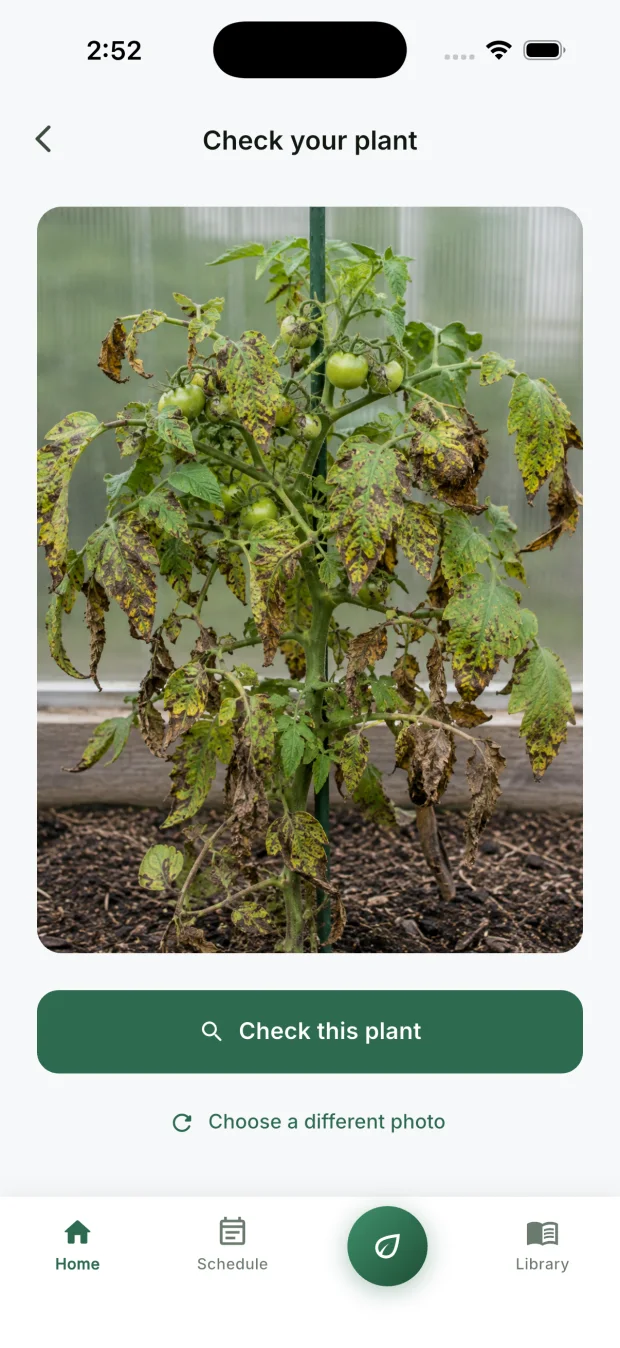
1 Snap and confirm
You take one photo, and it asks a plain question
No jargon and no plant Latin to learn first.
- One clear, close-up shot of the affected leaves is all it needs.
- It asks a couple of yes or no questions in everyday words to confirm what it sees.
- It shows a reference photo to compare against, so you are never left guessing.
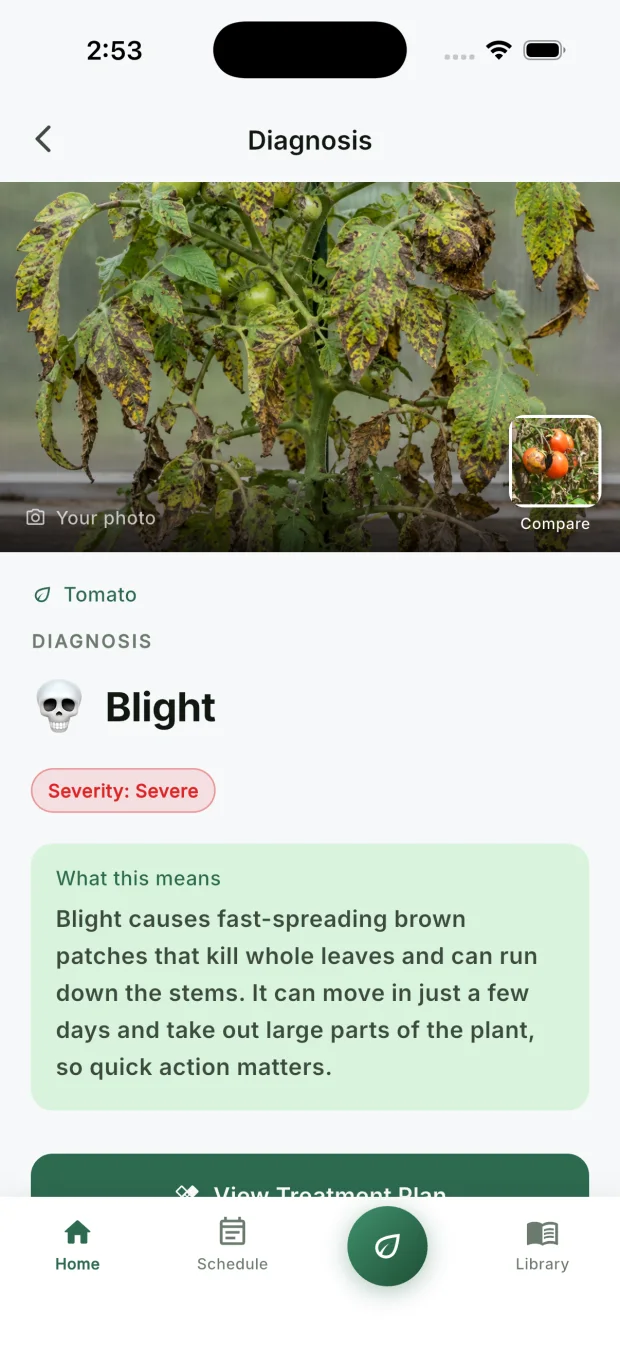
2 See the answer
The diagnosis lands on your own photo
Your own leaf, named and explained.
- The diagnosis in plain terms (early blight or late blight), and what it means for the plant.
- A severity read, from mild to severe, so you know how urgent it is.
- A short explanation of why, written to be understood.
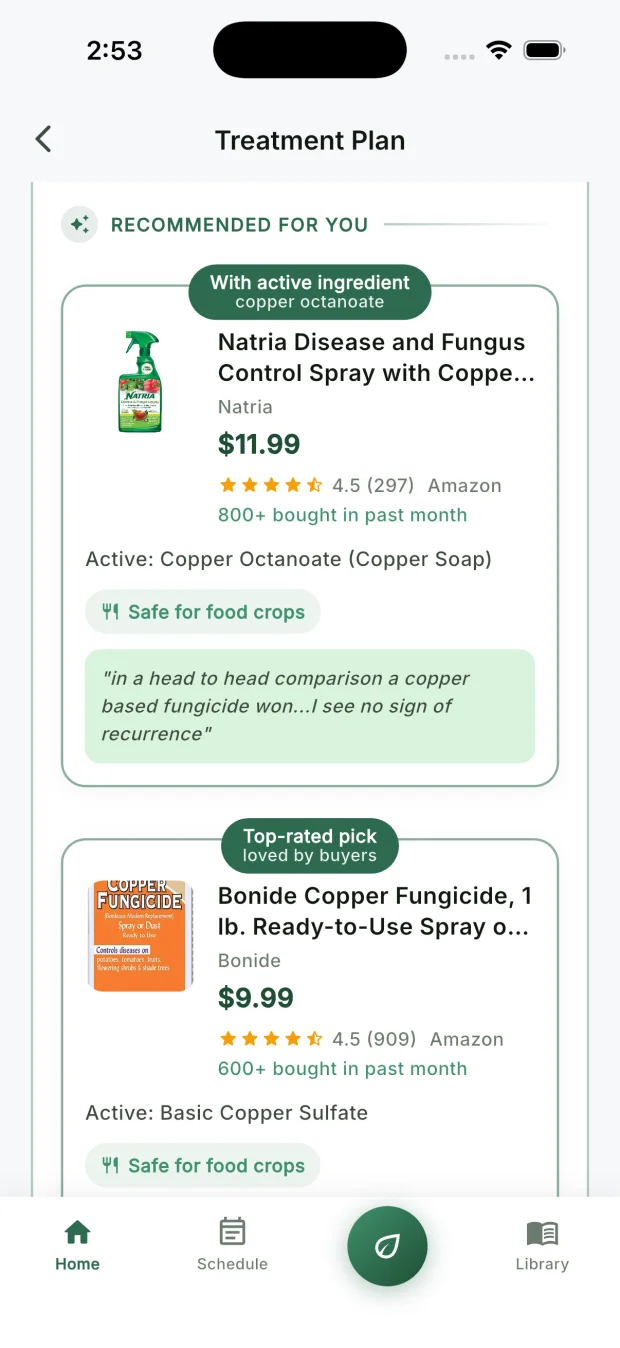
3 Get the plan
A plan built for tomatoes, scaled to the case
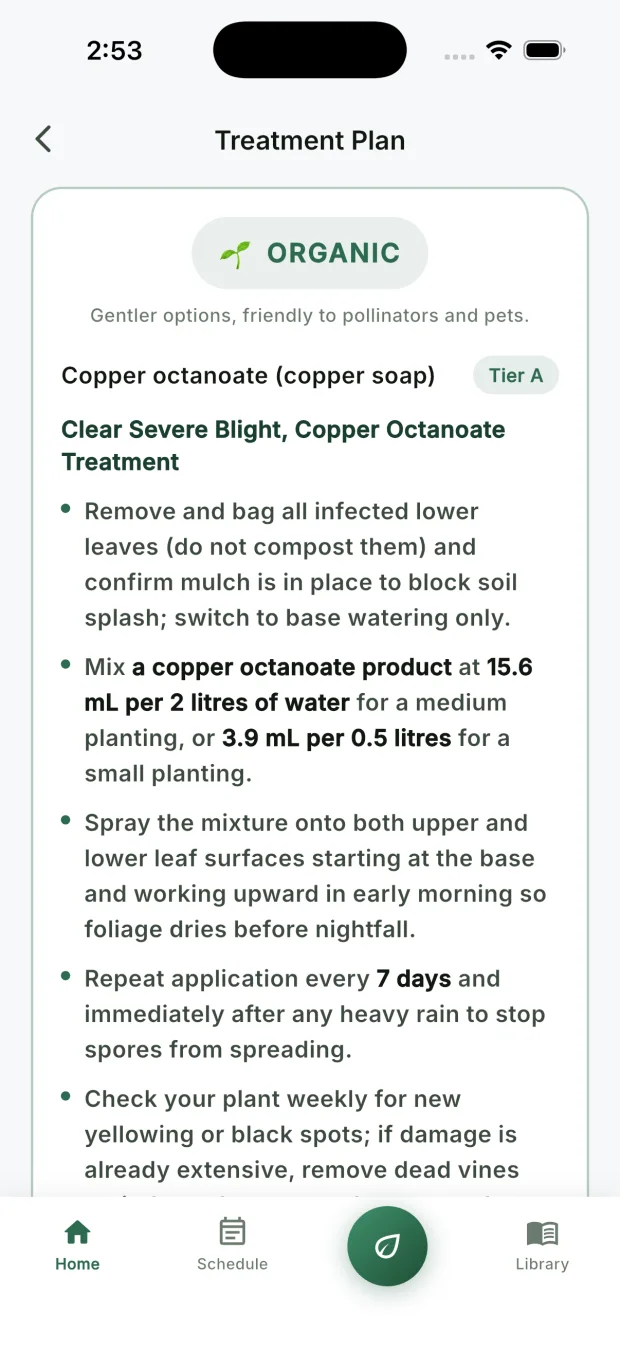
The plan spells out the exact product and the exact mixing rate. For tomato blight it is copper based, an organic contact fungicide labeled for both early and late blight. A milder or early case is met with a lighter preventive schedule, and a fast-moving case gets fuller coverage and more frequent reapplication.
The active ingredients that work
We talk in active ingredients, not brand names, so you know exactly what you are putting on your plant.
One idea runs through everything below: most blight sprays are protectants. They form a barrier on healthy leaves so arriving spores cannot get a foothold, which means they work best applied before or at the very first sign of disease, not as a rescue once leaves are already covered.4 Reapply after heavy rain and as new growth appears, since the new leaves are unprotected.
Organic options
- Copper is the workhorse organic option and the one most often recommended for both blights. Copper ions are toxic to fungal and water-mold spores on contact, so a copper spray on clean foliage slows both early and late blight.68 It is a protectant, not a cure, so timing and thorough coverage of both leaf surfaces matter more than the label promises. Copper can build up in soil over many seasons and can spot foliage if applied in hot sun, so stick to the labeled rate and spray in the cool of the day. The same copper sprays are the organic mainstay for other fungal leaf spots too, like the anthracnose that spots a fiddle leaf fig.
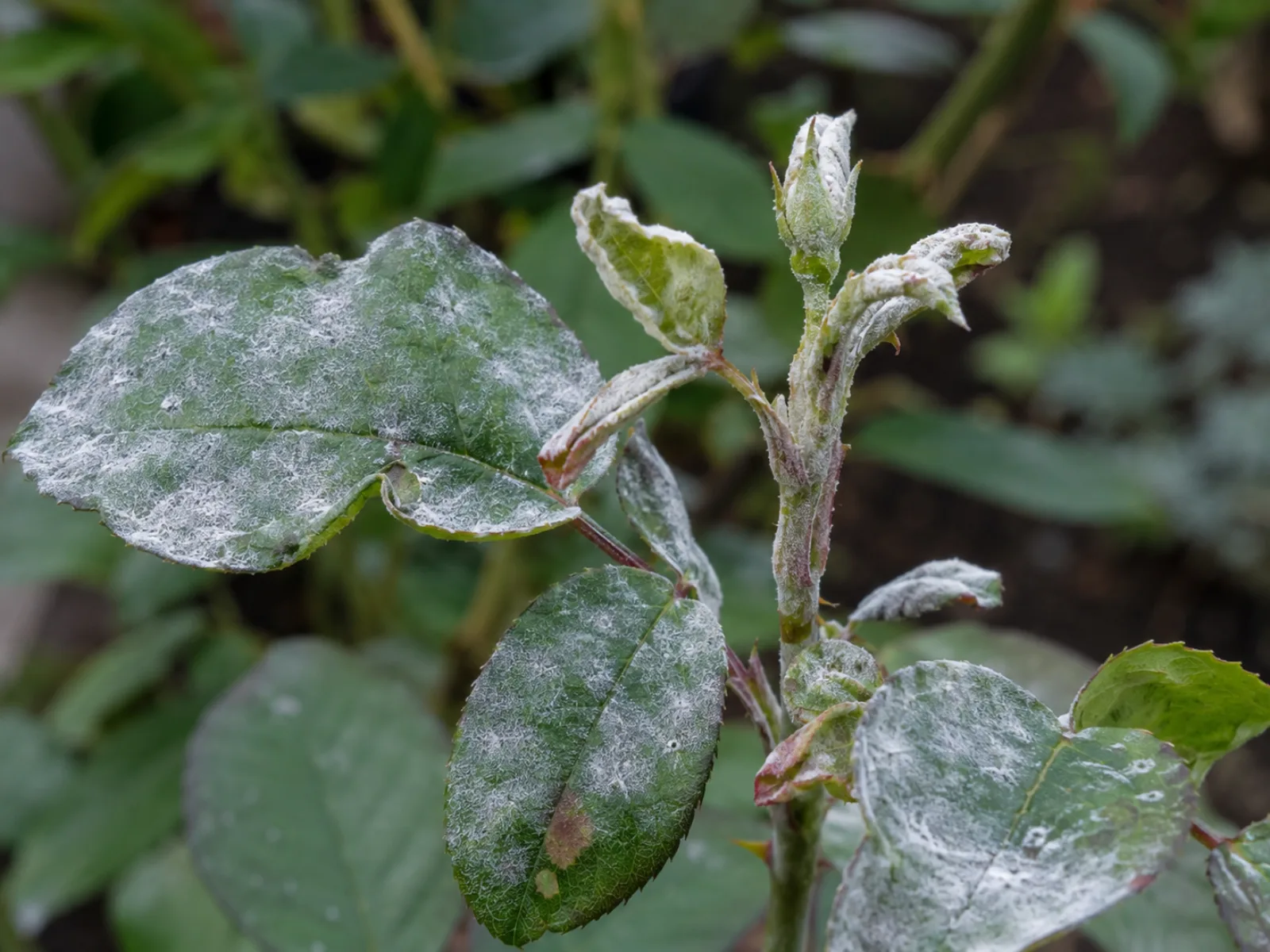
- Bacillus biofungicides (Bacillus subtilis and Bacillus amyloliquefaciens) are living bacteria that colonize the leaf surface and produce compounds that suppress fungal growth. They are labeled for early blight and leaf spots and are OMRI-listed for organic gardens, giving useful protection on early or mild cases, though they are weaker against a hard late-blight push.6 The same biofungicides are used against rose powdery mildew.
Chemical options (conventional protectants)
- Chlorothalonil is a broad-spectrum, multi-site protectant fungicide, one of the most reliable conventional choices for tomato blights. Multi-site means it disrupts the pathogen at several points at once, so the fungus struggles to build resistance to it.4 It stays on the leaf surface (it is not systemic), so it protects only what it coats and must be reapplied to new growth and after rain.
- Mancozeb is another multi-site protectant used against both blights, in the same low-resistance-risk class as chlorothalonil.4 Note its pre-harvest interval on tomatoes, the number of days you must wait between spraying and picking fruit, which is listed on the label.
Always follow the product label, including the pre-harvest interval for anything you spray on fruit you plan to eat. For late blight in particular, sprays only protect healthy tissue. Once a plant is heavily infected, the right move is usually to pull and destroy it (bagged in the trash, not composted) so it does not seed the rest of your garden and your neighbours.23
Recommended products
Natria Disease and Fungus Control Spray with Copper Fungicide
A copper contact fungicide labeled for tomato early and late blight. It is a protectant, so start early and reapply on schedule and after rain, covering both leaf surfaces. Observe the label pre-harvest interval before picking fruit.
View on AmazonBonide Copper Fungicide, 1 lb Ready-to-Use Spray or Dust
A copper contact fungicide labeled for tomato early and late blight. It is a protectant, so start early and reapply on schedule and after rain, covering both leaf surfaces. Observe the label pre-harvest interval before picking fruit.
View on AmazonAs an Amazon Associate, CureMyPlants earns from qualifying purchases. The links above are affiliate links, so if you buy through them we may earn a small commission at no extra cost to you. We only recommend products we would use on our own plants.
How to prevent it next season
- Choose resistant varieties. This is the single biggest lever for late blight. Varieties like Mountain Magic, Mountain Merit, Defiant PhR and Iron Lady carry late-blight resistance genes, and those combining both the Ph-2 and Ph-3 genes give the strongest protection against the strains now common in North America.5 Iron Lady, from the Cornell breeding program, is notable for also resisting early blight and Septoria leaf spot.5 Resistance is not immunity, but it sharply cuts how often you need to spray.
- Rotate and clean up. Early blight overwinters in old debris and soil, so remove and bin spent tomato plants at the end of the season, and do not plant tomatoes where tomatoes, potatoes, peppers or eggplants grew in the past two years.12 Pull up volunteer tomato and potato seedlings, and get rid of any cull piles, which are a classic late-blight reservoir.2
- Open up the airflow. Space plants generously, stake or cage them, and prune the lowest leaves so the canopy dries quickly. Both blights need long periods of leaf wetness, so anything that speeds drying works against them.13
- Water at the base, not overhead. Drip or soaker hoses keep the foliage dry and stop spores splashing up from the soil. Avoid sprinkler irrigation, and water in the morning if you must wet the leaves.3
- Mulch, and spray ahead of trouble. A layer of mulch stops soil-borne early-blight spores splashing onto the lowest leaves. In regions with wet summers, start a preventive copper or chlorothalonil program before symptoms appear, since these protectants only guard tissue they already cover.4
Not sure which blight your tomato has?
Snap a photo and get a clear diagnosis with a step-by-step treatment plan, free on iPhone and Android.
Diagnose my plantRelated guides
References
- University of Minnesota Extension. Early blight in tomato and potato. extension.umn.edu
- University of Minnesota Extension. Late blight of tomato and potato. extension.umn.edu
- UC Statewide IPM Program (UC IPM). Late Blight, Home and Landscape (Pest Notes). University of California ANR. ipm.ucanr.edu
- UC Statewide IPM Program (UC IPM). Tomato: Late Blight, Pest Management Guidelines. ipm.ucanr.edu
- Cornell University, Cornell Vegetables. Evaluation of late blight resistant tomato varieties. vegetables.cornell.edu
- University of Connecticut, Integrated Pest Management. Late Blight of Tomato. ipm.cahnr.uconn.edu
- UMass Extension Vegetable Program. Tomato, Leaf Blights (early blight, Septoria leaf spot, late blight). umass.edu
- Pacific Northwest Plant Disease Management Handbook. Tomato (Solanum lycopersicum), Early Blight. pnwhandbooks.org