 CureMyPlants
Brown Spots on a Fiddle Leaf Fig: How I Spotted, Treated and Stopped Anthracnose
Dark brown or black spots ringed in yellow, spreading across a fiddle leaf fig, are usually anthracnose, a fungal leaf spot. Here is how I worked out what it was, what let it in, and exactly how I cleared it, from a gentle biofungicide to copper for the worst of it.
Diagnosis at a glance
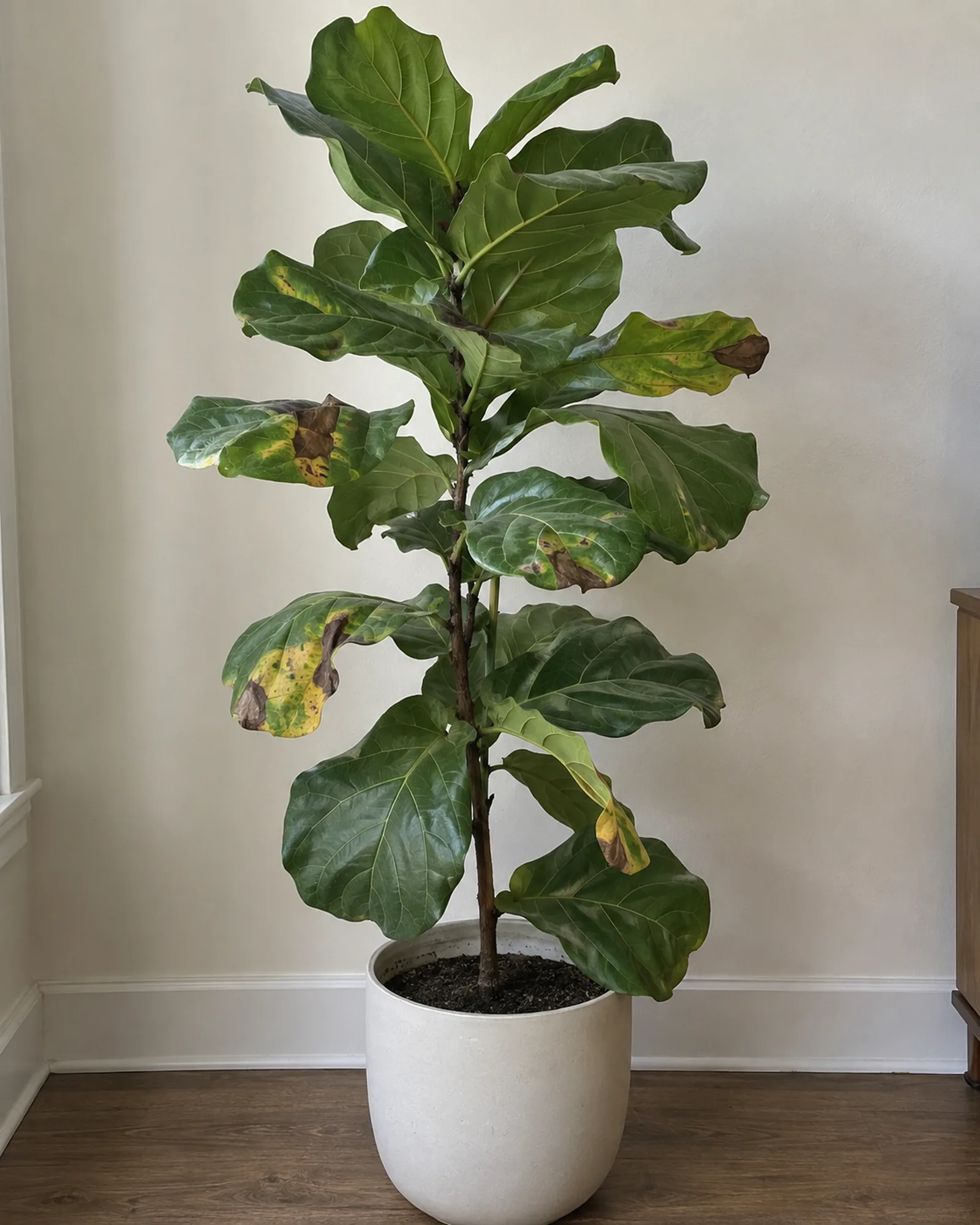
My fiddle leaf fig had a couple of small brown marks near the bottom that I told myself were just knocks from moving the pot. A few weeks later they were bigger, darker, ringed with yellow, and there were new ones higher up. That is when I stopped guessing and looked into it properly. What I had was anthracnose, one of the most common fungal leaf spots on a fiddle leaf fig, and once I understood what it wanted, it turned out to be very treatable. Below is what I found: how to recognise it, what let it take hold, and the treatments and habits that genuinely worked, from the gentle first steps I started with to the copper I reached for when it had spread.
What it looks like and how I identified it
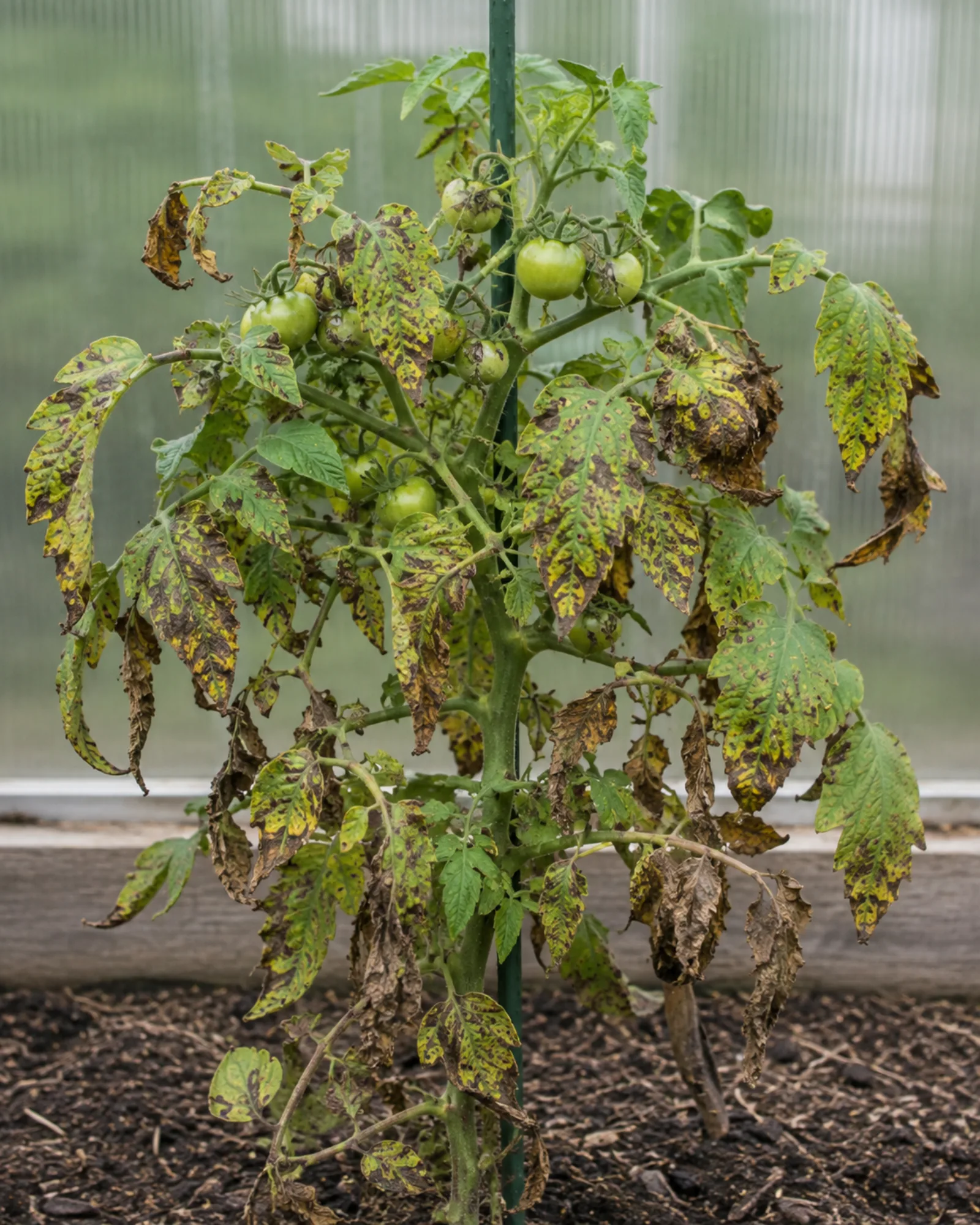
Anthracnose on a fiddle leaf fig shows up as brown to almost black spots on the leaves, and the giveaway for me was the ring of yellow tissue around each one.12 The spots often start at the tip or along the edge of a leaf and creep inward, and on a fiddle leaf fig they tend to appear first on the older, lower leaves before working up the plant.24 Left alone, the small spots enlarge and run together into large, irregular dead patches, and a badly hit leaf can turn mostly brown and drop.13 Some of the older lesions on mine had dried to a papery tan in the centre with a darker brown border, which is typical as the dead tissue ages.1
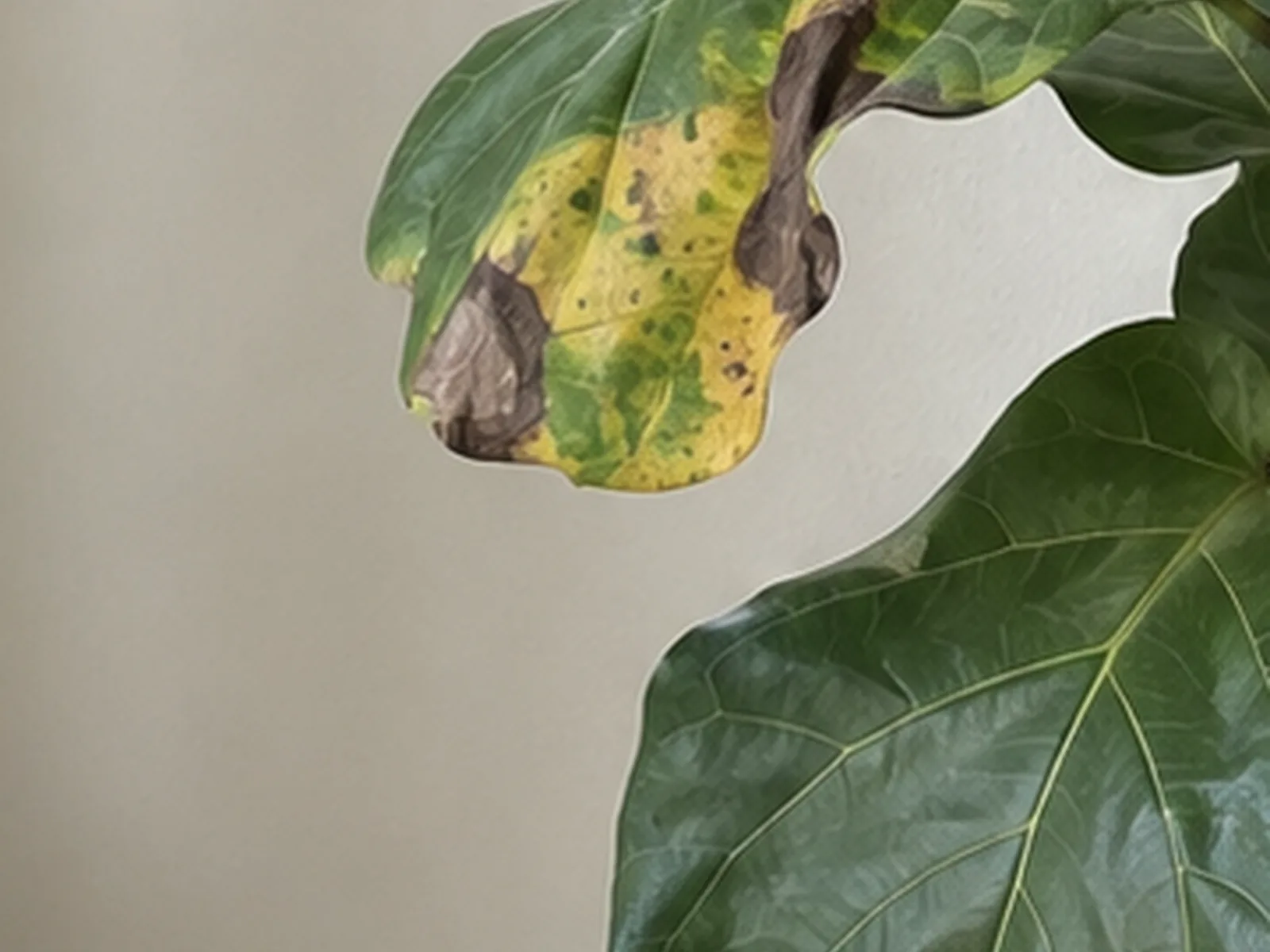
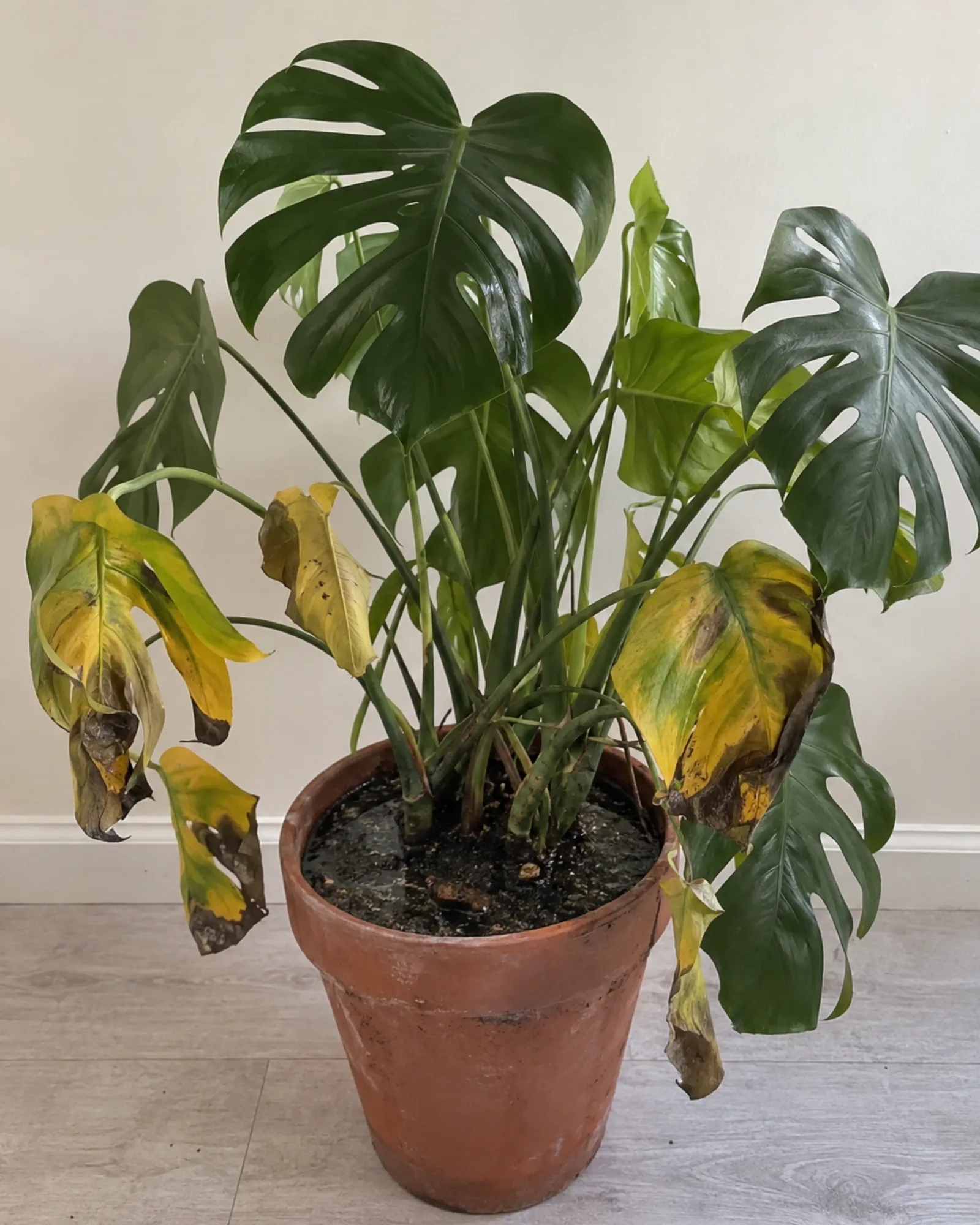
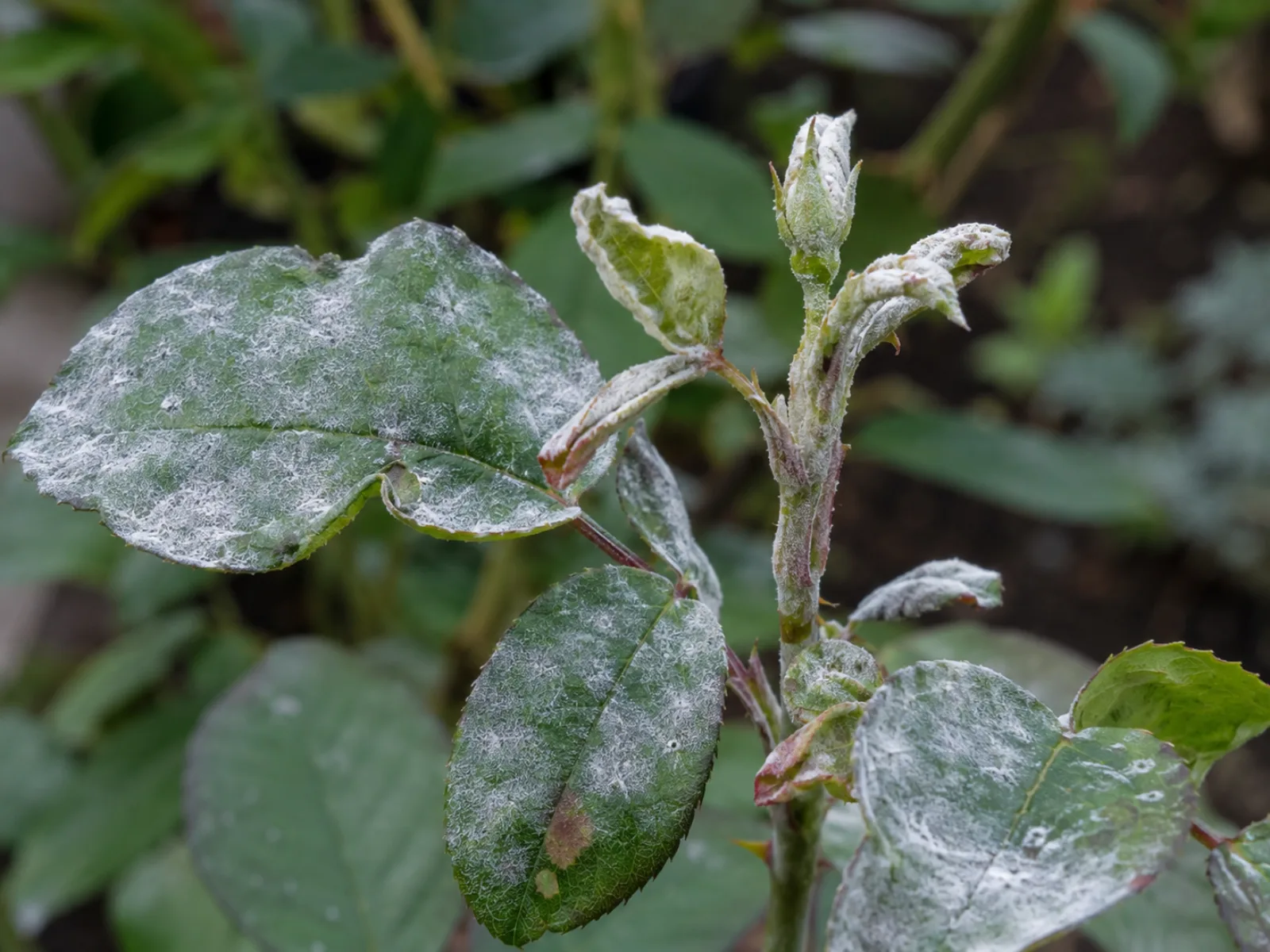
The part that took me a moment was telling anthracnose apart from the other reasons a fiddle leaf fig gets brown marks, because not every brown spot is a fungus. Dry, crispy brown edges with the rest of the leaf healthy are usually underwatering or low humidity, not disease. Small dark spots that appear alongside soft, mushy stems and a sour smell point to a bacterial or root problem instead, closer to what happens with monstera root rot than to a leaf spot.5 And a fine dusty white film on the surface is a different disease entirely, the kind I wrote about in rose powdery mildew, while sticky leaves crowded with tiny insects are a pest, closer to aphids than to a fungus. What marked mine out as anthracnose was the combination: defined brown spots, a yellow halo around them, and new spots appearing on nearby leaves over a few weeks.12
Defined brown to black leaf spots, usually with a yellow halo, that start at the tip or edge and merge into dead patches over time, are anthracnose. Dry crispy edges on an otherwise healthy leaf are a watering problem, and mushy stems point to rot, not leaf spot.
What causes it and how it spreads
Anthracnose is a fungal disease, caused by fungi in the genus Colletotrichum, whose sexual stage is often known as Glomerella.16 It is worth knowing that anthracnose is really a family of look-alike leaf spots rather than one single organism, and a few other fungi can cause similar spots on figs, which is part of why a confident diagnosis matters before you treat.16 The fungus survives on infected leaves and plant debris, and it spreads by spores that travel in water.13
That last detail was the whole story for my plant. The spores need a film of water on the leaf to germinate and infect, so the disease takes off in warm, humid conditions and wherever water sits on the foliage.13 Looking back, I had been misting the leaves most mornings and watering from above so the water ran down into the leaf axils, and the plant sat in a warm corner with very little air movement. I had built the fungus a perfect home. Splashing water is also how it gets from an old spot to a fresh leaf, each droplet carrying spores a little further, which is why the marks crept upward the way they did.13 Crowded plants and stagnant, humid air let it move faster still, since the leaves stay wet for longer.3
How the app confirmed it, and gave me a plan
The signs above were enough to make me fairly sure, but I did not want to reach for a spray on a guess, especially since a few different problems can look alike on a fiddle leaf fig. So I opened CureMyPlants, the app our own team builds, and let it check. It takes a photo and turns it into a plan in about a minute, and it does not need you to know the plant's name to make the diagnosis. That name only personalises the plan afterwards. Here is how it went for me.
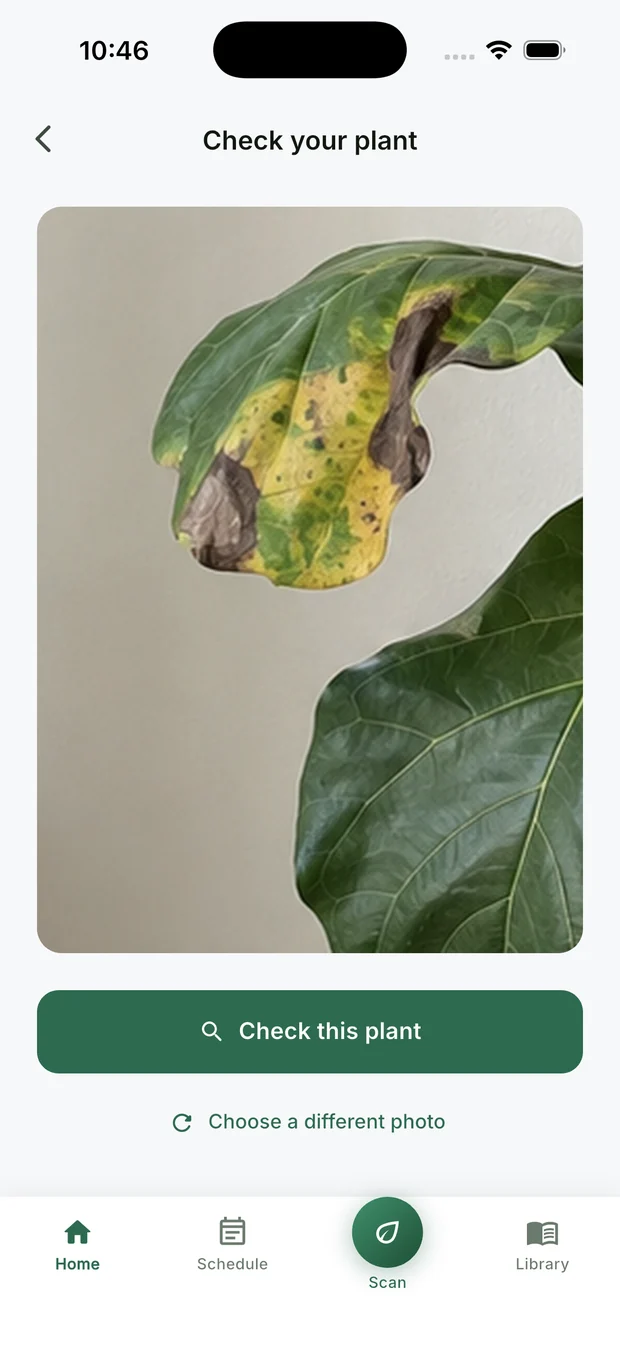
1 Snap the photo
I took one photo of an affected leaf
No jargon and no plant Latin to learn first.
- One clear, close-up shot of a spotted leaf was all it needed.
- I did not have to name the plant, or even know it was a fiddle leaf fig, to get a diagnosis.
- I tapped to check, and the app took it from there.
2 Answer what you see
It asked a plain yes or no question
Everyday words, not a botany quiz.
- It asked about what I could actually see, like whether the spots had a yellow ring.
- The questions were short and in plain English, so I was never left guessing.
- My answers helped it tell anthracnose apart from look-alike problems.
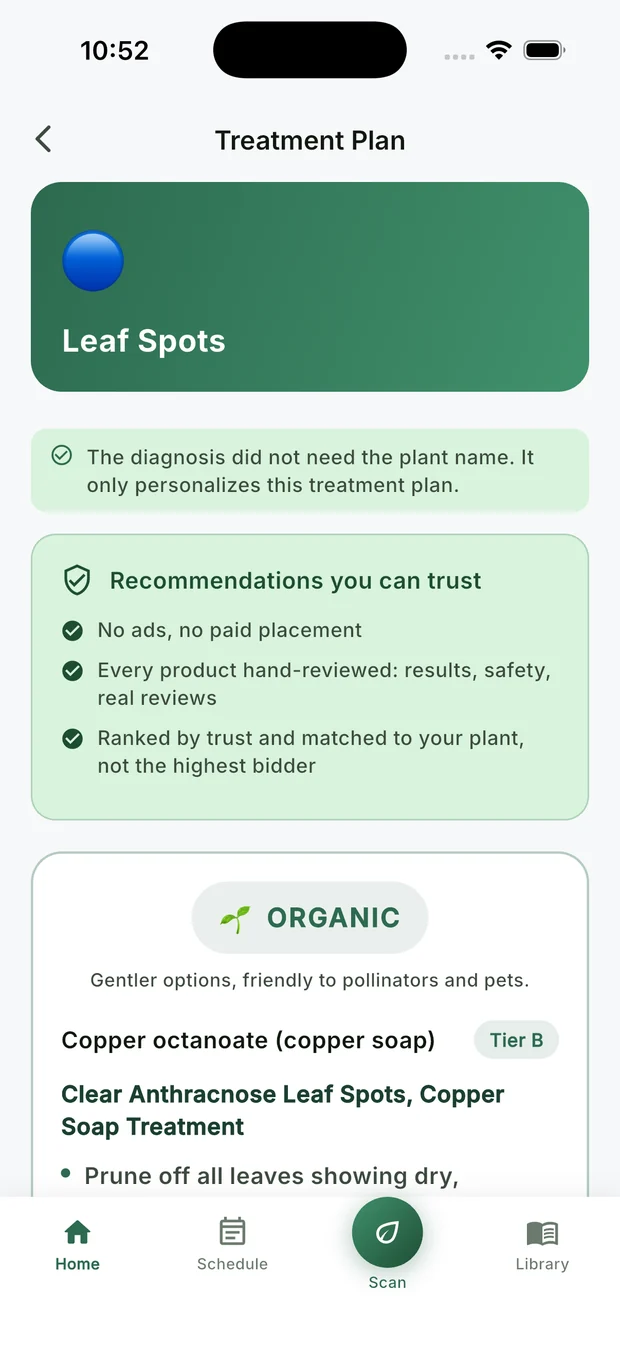
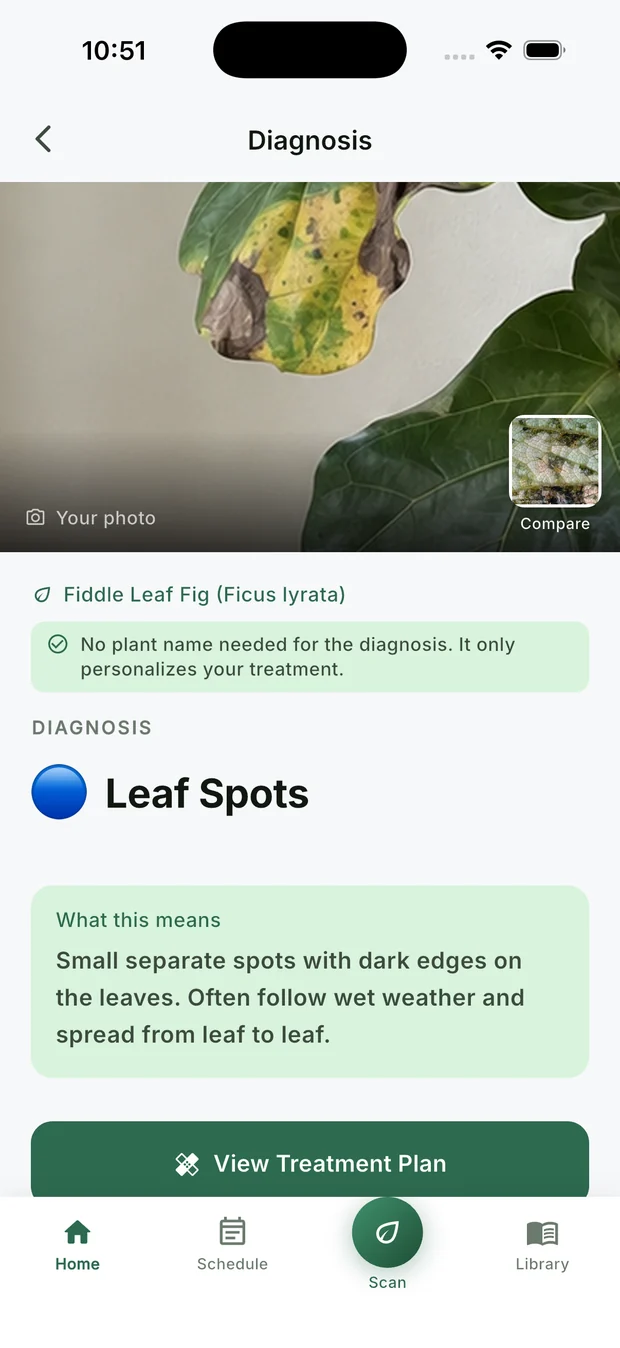
3 See the answer
The diagnosis landed on my own photo
My own plant, named and explained.
- The diagnosis in plain terms (anthracnose leaf spot), marked on the photo I took.
- A severity read, from mild to severe, so I knew how urgent it was.
- A short, plain-English note on what it meant for the plant.
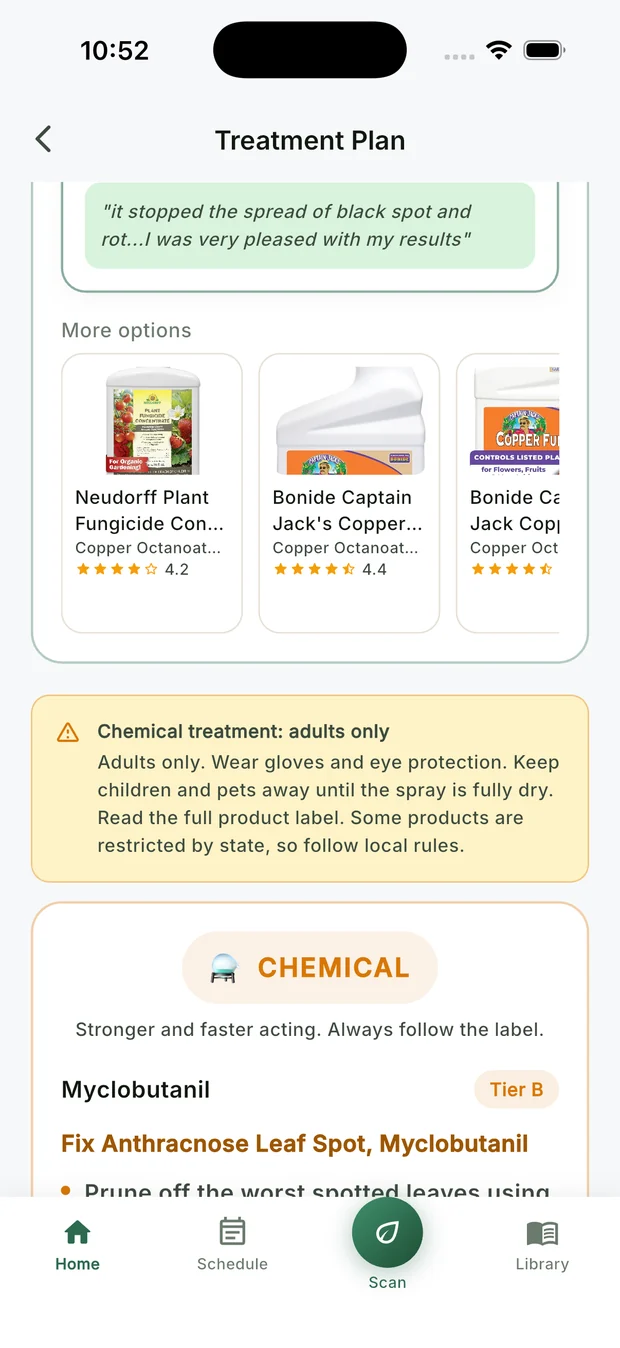
4 Get the plan
A plan scaled to my case
The exact product, the exact routine, the steps in order.
- Because mine had spread, it moved past the gentle-only steps to a copper spray.
- It gave the routine to follow, so there was no guesswork with the bottle.
- The steps were laid out in order, including the sanitation to do first and when to reapply.
5 Why the plan changes
The same disease, a different plan depending on how far it has gone
Anthracnose is anthracnose, but a spot or two on one older leaf and a plant with lesions merging across half the canopy call for different responses. The app scales the plan to the severity it reads from your photo, so you are not reaching for a strong spray when sanitation and a biofungicide would do, or the other way around.
The treatment ladder, from mild to severe
Start at the gentlest step that fits, and only climb the ladder if you need to. This is the same logic the app used on mine.
Mild: sanitation, airflow, and a biofungicide
- Fix the conditions first. This is the step that actually stopped mine getting worse. I moved the plant off on its own, stopped misting, and started watering only at the soil so no water touched the leaves.3 I put a small fan nearby on low to keep the air moving, because still, humid air is exactly what the fungus wants.3 None of this cures an existing spot, but it takes away the wet-leaf conditions the fungus needs to spread to new ones.
- Prune off the spotted leaves. I removed the worst-affected leaves at the base with scissors, wiping the blades with 70% alcohol between cuts so I was not carrying spores from leaf to leaf, and I binned the trimmings rather than composting them.13 Removing infected tissue takes a big share of the fungus off the plant in one go.
- Protect the healthy leaves with a Bacillus biofungicide. For an early, mild case this is the gentle option. A biofungicide based on a beneficial Bacillus bacterium colonises the leaf surface and releases compounds that suppress fungal growth, so it works best to protect the leaves you still have rather than to cure a spot already there.7 Cover both leaf surfaces and reapply about every 7 days while the disease is active, following the product label. It is a low-risk choice indoors, which is why the app leads with it on a mild case.
- Neem, as a light-case alternative. Neem oil has fungistatic activity that can help hold back a light, early infection, and it doubles as a mild pest control if you have that too.5 Spray both leaf surfaces every 7 to 14 days, and keep it out of direct sun and high heat so it does not mark the leaves.
Moderate to severe: copper
- Copper octanoate is the organic mainstay. Once the spots were merging and covered a good part of the lower canopy, the app moved me to copper, and this is the step that turned it around. Copper octanoate, also sold as copper soap, is a contact protectant that releases copper ions to disrupt the fungus on the leaf surface.16 I kept up the pruning and sanitation, then sprayed to wet both sides of every leaf and reapplied every 7 to 10 days for continued protection. Copper can mark or burn the leaves of some plants, so I did a small test spray on one leaf first and checked it a day later before doing the whole plant.6
- A systemic fungicide, held in reserve. For a moderate to severe case that a confirmed fungus is driving and that copper has not held, a systemic fungicide such as myclobutanil is the next rung. It is taken up by the plant and gives some curative action rather than only protecting the surface, and it is reapplied roughly every 14 days.6 I did not need it, and I would only use it once I was certain the problem was fungal, because a systemic will do nothing for a bacterial or watering issue that only looks similar.
A fiddle leaf fig is usually a houseplant, so treat it like one. Avoid sulfur, captan and chlorothalonil indoors, since they are not meant for enclosed spaces. If you use any spray inside, move the plant somewhere well ventilated, or take it outside to spray and let it dry before bringing it back. Always follow the product label, and remember a fungicide only helps if the problem is genuinely a fungus.
Whichever rung you are on, the leaves that are already spotted will not heal. The goal is to stop new spots forming and let clean, new growth come through, which is exactly what happened on mine once the leaves stayed dry and the copper went on. If the whole plant starts collapsing or the stems go soft and mushy, stop and reconsider, because that is a sign of rot rather than a simple leaf spot and it needs a different approach.5
Recommended products
Monterey Complete Disease Control
A gentle, OMRI-listed biofungicide for an early or mild case. The beneficial bacterium colonises the leaf and suppresses the fungus, so it works best to protect the healthy leaves you still have. Cover both surfaces and reapply about weekly while the disease is active.
View on AmazonGarden Safe Neem Oil Extract Concentrate, 10 oz
A mild organic option that can help hold back a light, early infection, and doubles as gentle pest control. Spray both leaf surfaces every one to two weeks, and keep it out of direct sun and high heat so it does not mark the foliage.
View on AmazonNatria Disease and Fungus Control Spray with Copper Fungicide, 24 oz
The organic workhorse once spots are spreading. This ready-to-use copper spray is a contact protectant, so cover both leaf surfaces and reapply every 7 to 10 days. Copper can mark sensitive leaves, so test one leaf first. OMRI-listed and labelled for indoor and outdoor plants.
View on AmazonSpectracide Immunox Multi-Purpose Fungicide, 16 oz Concentrate
A systemic fungicide for a moderate to severe case that copper has not held, and only when you are sure the cause is fungal. It moves inside the plant for some curative action, reapplied about every 14 days. Spray in a well-ventilated spot and follow the label carefully.
View on AmazonAs an Amazon Associate, CureMyPlants earns from qualifying purchases. The links above are affiliate links, so if you buy through them we may earn a small commission at no extra cost to you. We only recommend products we would use on our own plants.
How I keep it from coming back
- Keep the leaves dry. This was the single biggest change. I water at the soil, never over the leaves, and I stopped misting, because a film of water on the leaf is what the fungus needs to infect.13
- Give it air. I keep the plant out of a tight, stagnant corner and let air move around it, so the leaves dry quickly after any splash. A small fan on low does the job in a still room.3
- Wipe up fallen debris. I clear away any dropped, spotted leaves from the top of the pot promptly, since the fungus lives on that debris and waits for the next wet leaf.13
- Quarantine new arrivals. New plants now sit apart from the fiddle leaf fig for a couple of weeks while I watch for spots, so I am not importing a problem onto a plant I have just cleared.3
- Check the new leaves often. A quick weekly look, especially at the lower and inner leaves, catches a fresh spot while pruning one leaf is still all it takes.1
Not sure what your plant has?
Snap a photo and get a clear diagnosis with a step-by-step treatment plan, free on iPhone and Android.
Diagnose my plantRelated guides
References
- Missouri Botanical Garden. Anthracnose, Plant Finder Pests and Problems. missouribotanicalgarden.org
- University of Florida IFAS Gardening Solutions. Anthracnose. gardeningsolutions.ifas.ufl.edu
- University of Minnesota Extension. Anthracnose. extension.umn.edu
- Clemson Cooperative Extension, Home & Garden Information Center. Houseplant Diseases & Disorders. hgic.clemson.edu
- University of Maryland Extension. Leaf Spot Diseases of Houseplants. extension.umd.edu
- Pennsylvania State University Extension. Anthracnose. extension.psu.edu
- Oregon State University, Pacific Northwest Pest Management Handbooks. Biopesticides and biological control agents (Bacillus-based biofungicides). pnwhandbooks.org