 CureMyPlants
Monstera Root Rot: How to Identify, Treat and Prevent It
A monstera that droops even though the soil is still damp is the classic sign of root rot. Here is how to be sure, the step by step way to cut out the rot and repot, and the simple watering habits that stop it coming back.
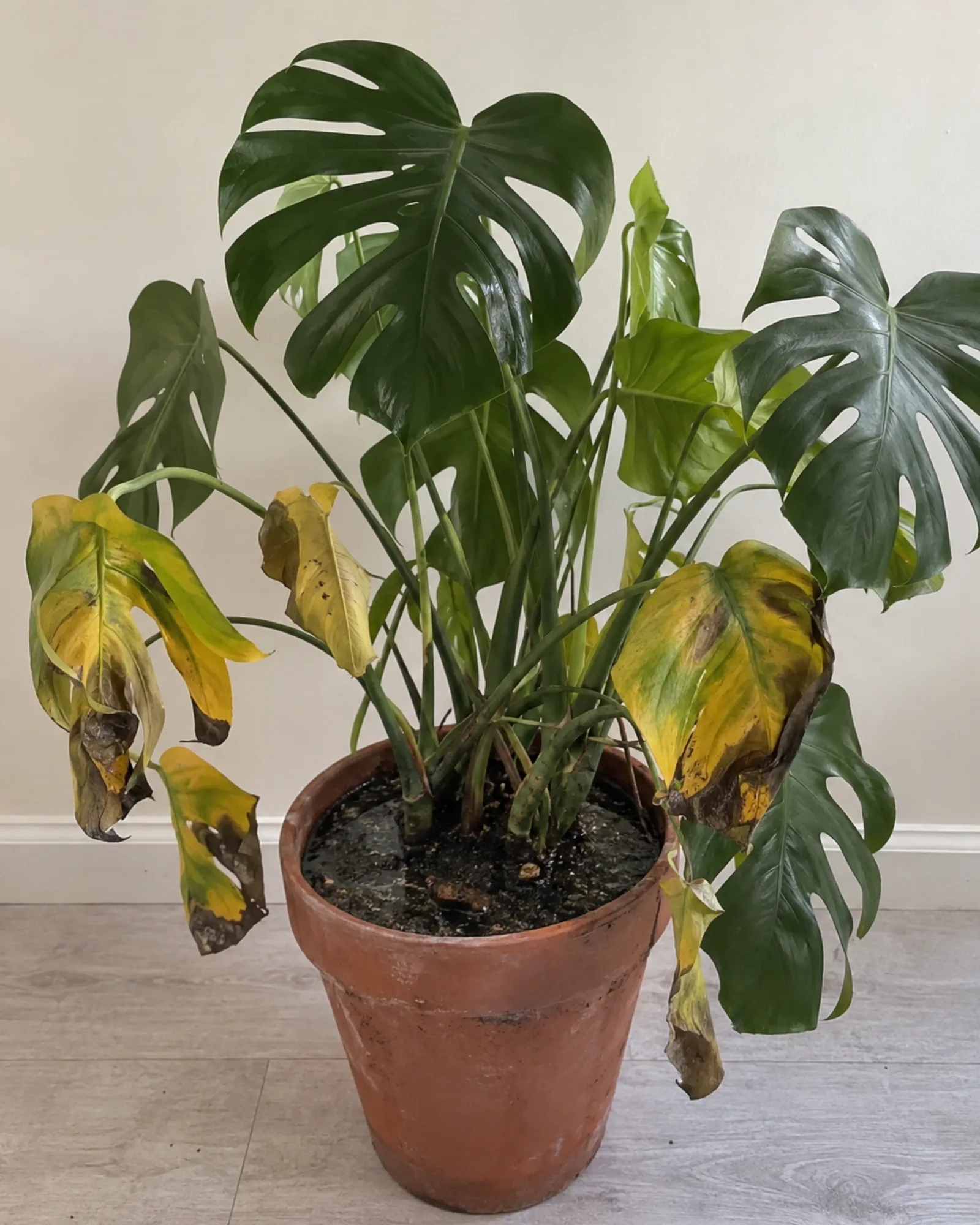
Diagnosis at a glance
Your monstera is drooping, the lower leaves are turning yellow, and yet the soil still feels wet days after you last watered it. That combination, wilting despite moist soil, is the signature of root rot. It is one of the most common ways a Monstera deliciosa gets into trouble, because the plant is so often loved with a little too much water.6 The good news is that a monstera caught in time usually recovers. The fix is not a bottle of anything. It is removing the dead roots and changing the conditions that killed them. Below is how to identify root rot, what causes it, exactly how to treat it, and how to keep it from happening again.
What it looks like and how to identify it
Root rot starts underground, so the first signs you see are on the leaves and stems, and they are easy to misread. Watch for a cluster of these together:
- Yellowing lower leaves. Rotten roots can no longer take up water and nutrients, so the oldest, lowest leaves yellow first and the plant looks generally stressed.1
- Drooping or wilting despite moist soil. This is the key one. Wilting that begins on the bottom leaves and creeps upward looks exactly like thirst, which is why so many people water more and make it worse. It is very important to check the roots and the moisture of the mix before adding any water.1
- Mushy, dark stem bases and soft stems. As rot advances it can reach the base of the plant, leaving the lower stem soft, brown or black and sometimes slightly translucent instead of firm and green.23
- A musty, sour smell from the pot. Waterlogged, low oxygen soil and rotting tissue give off a distinct rotten or musty odor.
The proof, though, is at the roots. Slide the plant out of its pot and look. Healthy monstera roots are firm and light colored, white to pale tan. Roots hit by rot turn brown or black, go soft and mushy, and slough their outer layer off in your fingers, sometimes leaving a thin thread behind.1 That difference, firm and pale versus soft and dark, is the single most reliable test there is.
Wilting and yellowing while the soil is still wet, plus roots that are brown, black and mushy rather than firm and white, means root rot, not thirst. Do not water more.
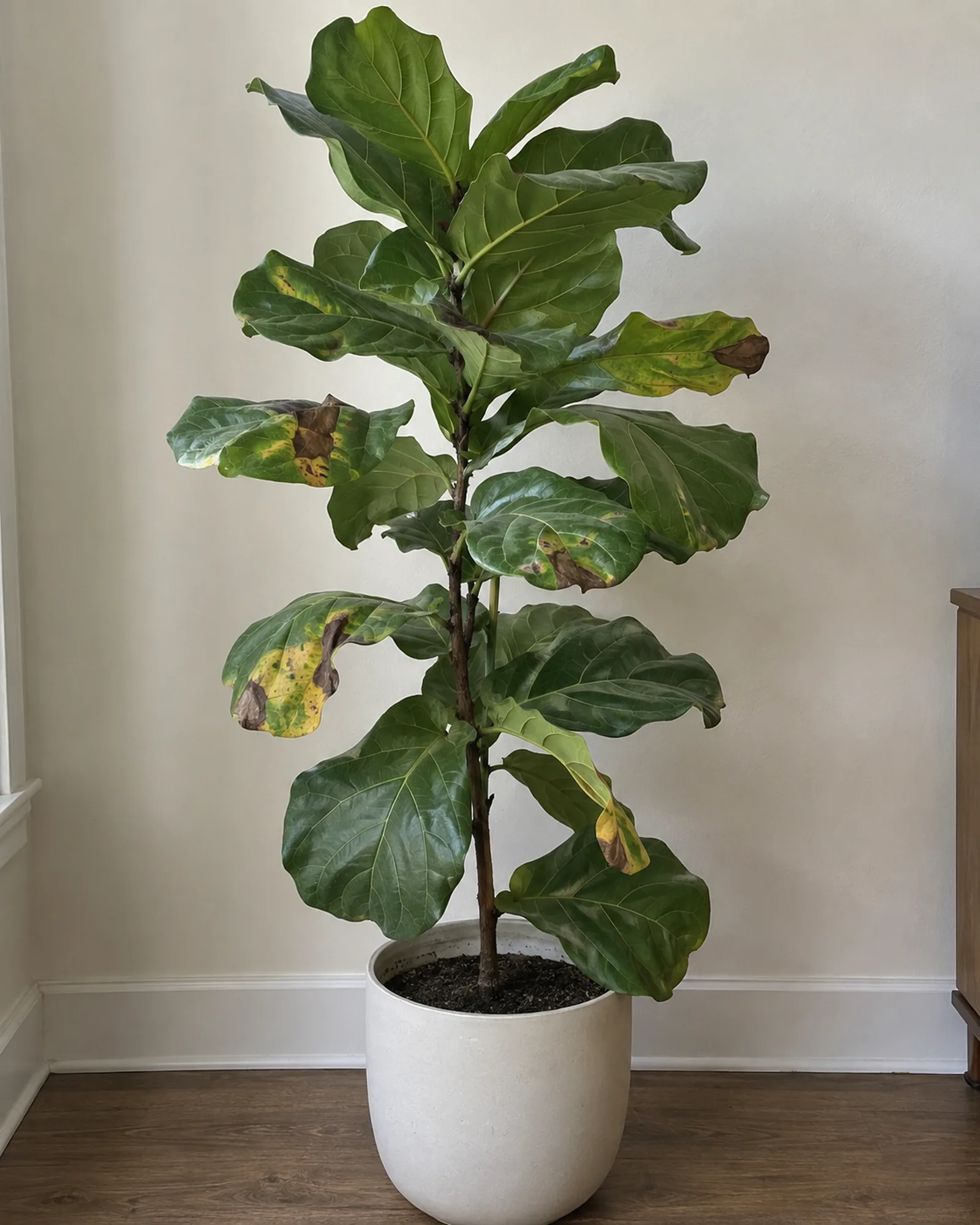
It helps to rule out the two things that get mistaken for rot. Underwatering looks similar from a distance, but the soil will be bone dry and pulling away from the pot, and the leaves go crispy and papery rather than soft and limp. Normal aging is different again: a single old leaf near the base turning yellow now and then, while the rest of the plant looks strong and the roots are firm, is just the plant retiring an old leaf, not a disease. And distinct brown spots on the leaves themselves, especially when they are ringed with yellow, point to a leaf spot disease rather than root rot, like the anthracnose that shows up on a fiddle leaf fig.
What causes it and how it takes hold
Root rot is a two step story. The first step is not a germ at all, it is water. When a monstera sits in soil that stays soggy, the air pockets in the mix fill with water and the soil runs out of oxygen. Roots need to breathe, so waterlogged soil suffocates and weakens them.1 The second step is the infection. Those stressed roots are then an easy target for a group of soil borne pathogens that were waiting for exactly these conditions: the water molds Pythium and Phytophthora (the genus behind late blight in tomatoes), and the true fungi Rhizoctonia and Fusarium.1 These organisms thrive in wet, poorly drained soil and finish off the roots that overwatering weakened.1
Different pathogens leave slightly different signatures. Pythium causes a dark brown to black wet rot that makes roots soften and disintegrate. Phytophthora behaves similarly but is more aggressive, and in bad cases it climbs into the stem base and crown, girdling the plant's plumbing so the whole thing can collapse.2 Both water molds are, in the words of Royal Horticultural Society guidance, primarily a disease of heavy or waterlogged soils, where roots can literally drown.3 University of California guidance on the same organisms is blunt about the trigger: saturated, poorly drained soil and overwatering are what let them attack.4
Several everyday habits set the stage:
- A dense, water retentive mix. A monstera is an aroid that climbs trees in the wild, so its roots want a chunky, airy medium. A heavy, peaty potting soil holds too much water and too little air.6
- A pot with no drainage holes. Water that cannot escape simply pools at the bottom, and the roots sit in it.
- An oversized pot. A large volume of soil around a small root ball stays wet far too long, because the roots cannot drink it dry. A monstera actually tolerates being a little pot bound better than being over potted.6
- Cold, soggy conditions. A wet pot in a cold spot dries slowly and stays saturated, and cool wet soil is exactly what Pythium favors.2
- Reused, contaminated soil. Old mix from a plant that had rot can carry the pathogens forward into the next pot.
Confirm it, and get a plan that fits
The signs above are usually enough to recognize root rot by eye, and the root check settles it. If you would rather be certain before you start cutting, or you want steps matched to your plant and to how far the rot has gone, the CureMyPlants app can do that for you. It takes a photo and turns it into a monstera specific plan in about a minute. Here is how it works, in three moments.
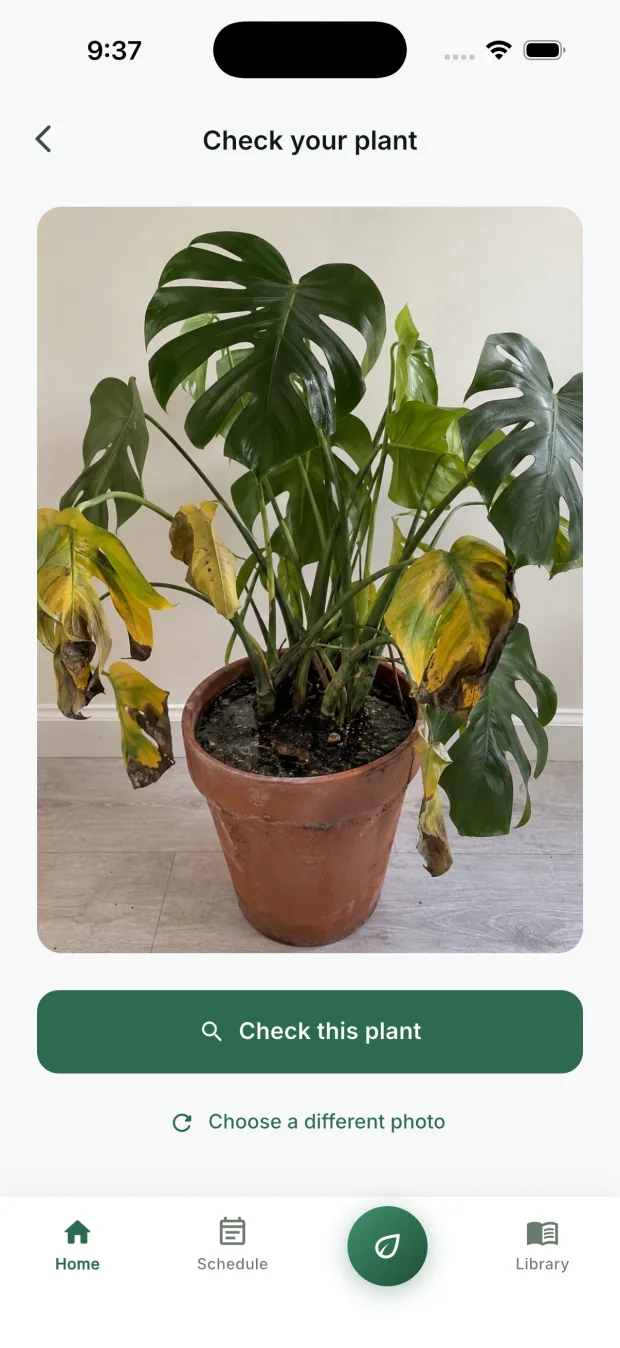
1 Snap and confirm
You take one photo, and it asks a plain question
No jargon and no plant Latin to learn first.
- One clear shot of the whole monstera, plus a close look at the drooping leaves, is all it needs.
- It asks a couple of yes or no questions in everyday words, including whether the soil is still wet.
- It shows a reference photo to compare against, so you are never left guessing.
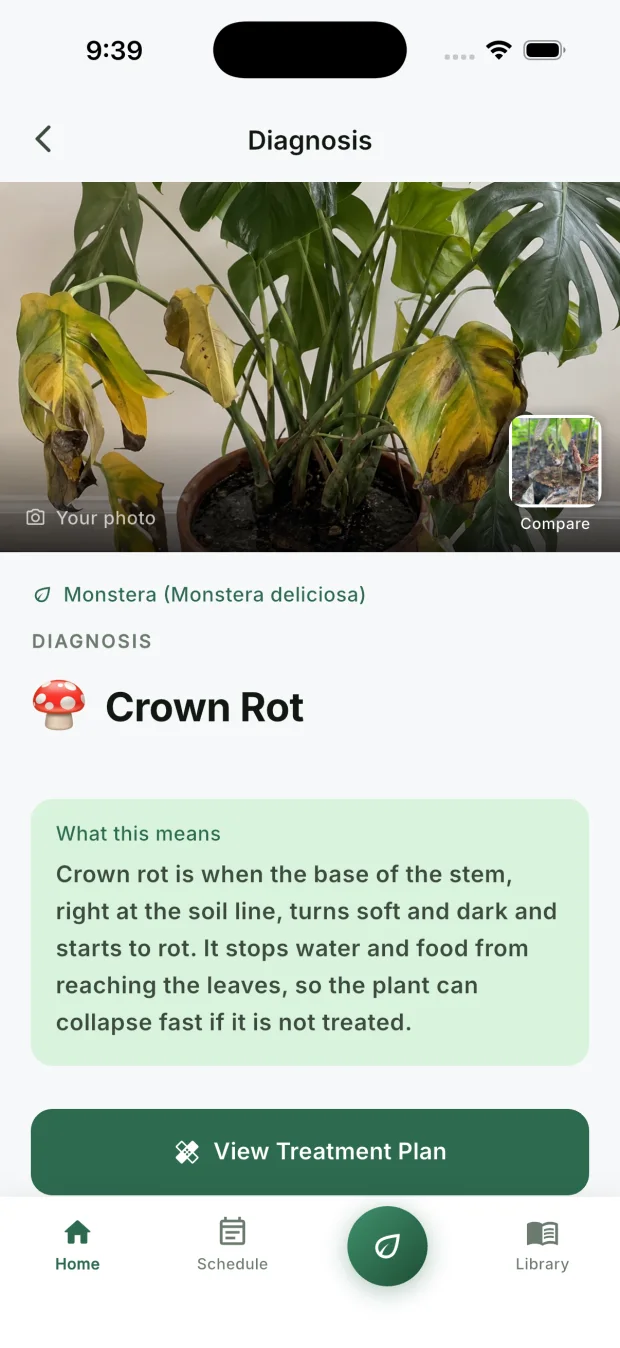
2 See the answer
The diagnosis lands on your own photo
Your own plant, named and explained.
- The diagnosis in plain terms (root rot), and what it means for the plant.
- A severity read, from mild to severe, so you know how urgent it is.
- A short explanation of why it happened, written to be understood.
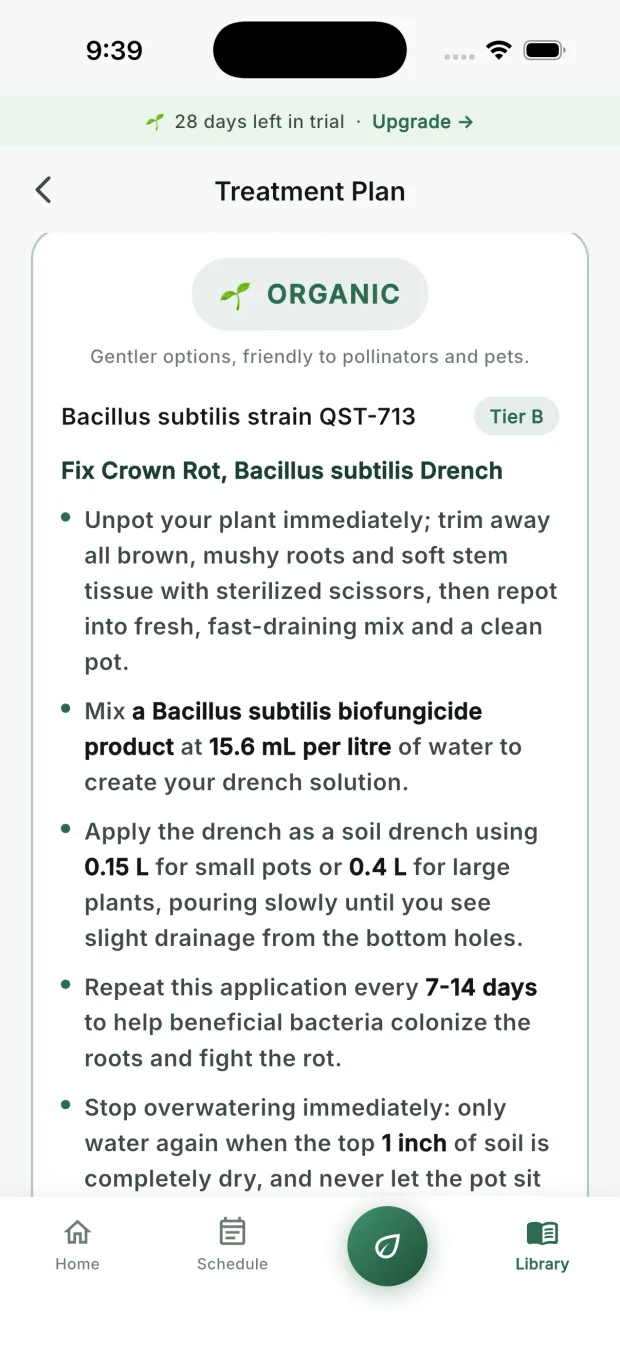
3 Get the plan
A plan built for monstera, scaled to the case
The same disease gets a different plan depending on how far it has spread. A monstera caught early gets a straightforward trim and repot. A severe one, where the rot has reached the stem, gets an honest plan that may mean saving a healthy cutting instead.
How to treat it, step by step
The real cure is mechanical, remove the rot and fix the conditions. Work on a clean surface and give yourself good light.
- Stop watering and unpot the plant. Ease the monstera out of its pot so you can see the whole root ball. If it is stuck, run a clean knife around the inside of the pot rather than yanking the stems.
- Rinse the soil off the roots. Wash the old mix away under a gentle stream of water until you can clearly see which roots are healthy and which are rotten. This also removes a load of the contaminated, pathogen carrying soil.7
- Cut away every rotten root. With scissors or snips that you have sterilized with rubbing alcohol, cut off all the brown, black, soft or mushy roots, going back to firm, pale, healthy tissue. If a root looks even slightly questionable, take it. Sterilize the blades again between cuts and when you finish, so you are not spreading the infection.1
- Remove the worst lower leaves. A monstera with a reduced root system cannot support all of its foliage. Taking off the most yellowed, worst affected lower leaves lightens the load the recovering roots have to carry.
- Repot into fresh, fast draining mix. Never reuse the old soil, it can carry the rot forward.7 Use a chunky aroid blend that holds some moisture but drains freely and stays full of air, for example orchid or fir bark plus perlite plus a little coco coir or quality potting mix. Put it in a clean pot with drainage holes that is only a little bigger than the trimmed root ball, not a big one.26
- Water sparingly from here on. Give it a modest drink to settle the mix, then let the top of the medium dry out before you water again. The plant is rebuilding roots and needs air around them far more than it needs water.5
- Give it light, warmth and airflow. Bright, indirect light, a warm spot and moving air all help the mix dry at a healthy pace and the plant recover. A warm, humid position suits a monstera, but the soil must be allowed to dry between waterings.5
A dilute hydrogen peroxide rinse or a fungicide drench can knock back pathogens on the surface of the roots that are left, but neither will revive roots that are already dead, and neither is a substitute for cutting out the rot and fixing the drainage. For the water molds behind most cases there is no reliable chemical control available to home gardeners, so treat drainage and watering as the real medicine.34
Be realistic about severe cases. If most of the roots are gone and the rot has climbed into the main stem or the crown, leaving the base soft and collapsing rather than just the roots, the plant often cannot be saved as it stands, because the pathogen has girdled its plumbing.2 When that has happened, the smarter rescue is to take a healthy cutting from higher up the plant, above any soft or discolored tissue, with at least one node, and propagate a fresh, clean start rather than nursing a root system that is mostly lost.
What recovery looks like. Give a repotted monstera time and resist the urge to fuss over it. For the first few weeks it may look sorry for itself while it grows new roots, and you might see no fresh leaves at all during that stretch. That is normal. Hold off on fertilizer until you see clear new growth, since feeding a plant with a damaged root system only adds stress it cannot use. Keep it in bright indirect light, keep it warm, and above all keep it on the drier side, watering only once the top of the mix has dried. A new leaf unfurling is the signal that the roots have taken hold and the worst is behind you. If the plant keeps declining, wilting further and going soft at the base despite all of this, the rot had gone too far, and a healthy top cutting is your best remaining shot.
Recommended products
These two do not replace the repotting. After you have unpotted, cut away the rotten roots and moved the plant into fresh airy mix, they help protect the healthy roots that remain and the new growth to come. Neither one will revive roots that are already dead.
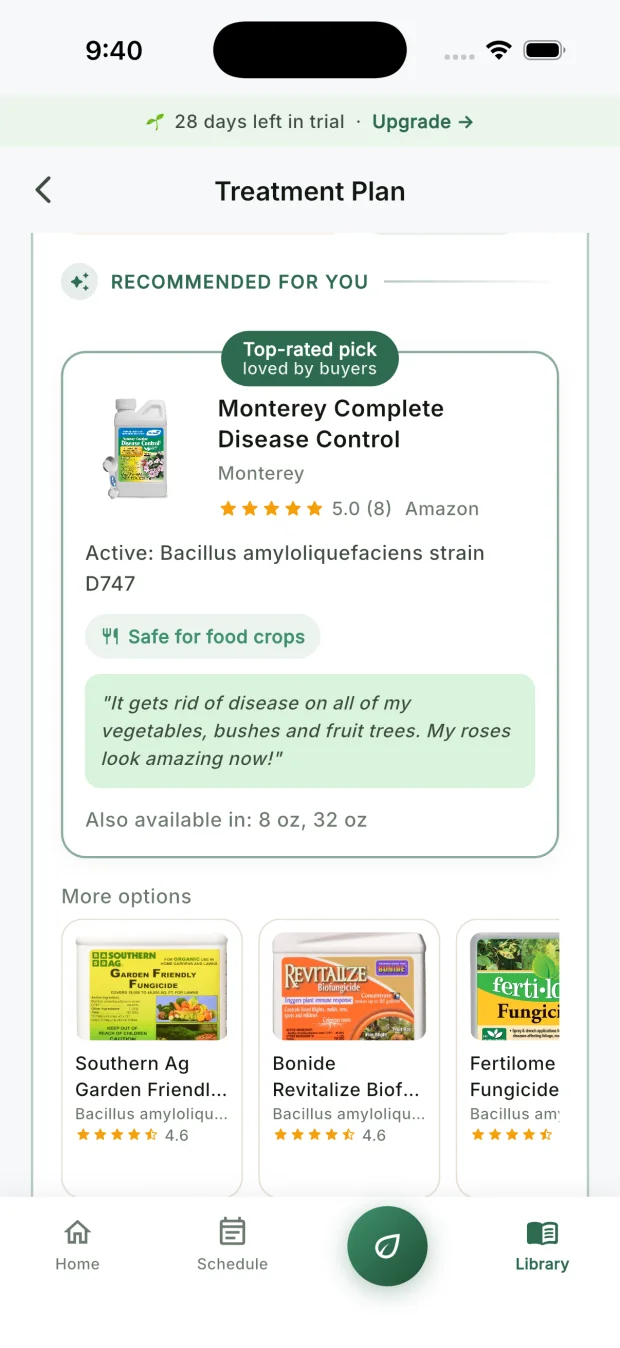
Monterey Complete Disease Control
An organic biofungicide built on a beneficial bacterium, the same kind used against leaf diseases such as rose powdery mildew. Used as a soil drench after you repot, it helps suppress the soil pathogens behind root rot and protect the healthy roots that are left. It does not bring dead roots back.
View on AmazonReliant Systemic Fungicide (Agri-Fos / Garden Phos)
A potassium phosphite systemic, the standard tool against the water molds Phytophthora and Pythium that drive root rot. The plant takes it up so it can protect new growth. Use it alongside fixing the drainage, not instead of cutting out the rot.
View on AmazonAs an Amazon Associate, CureMyPlants earns from qualifying purchases. The links above are affiliate links, and buying through them costs you nothing extra. We only recommend products we would use on our own plants.
How to prevent it
Root rot is far easier to avoid than to cure, and prevention comes down to never letting the roots sit in water:
- Use a well draining aroid mix. Give your monstera a chunky, airy medium built for good drainage, not a dense general purpose soil.56
- Always pot into a container with drainage holes. If you love a cache pot with no hole, keep the plant in a plain nursery pot inside it so water can escape.
- Water only when the top of the mix is dry. Feel the soil first, and water only when the top inch or two is dry to the touch. Let it dry between waterings, and cut back further in fall and winter when growth slows.56
- Empty the saucer. Never leave the pot standing in a saucer of drained water. Tip it out a few minutes after watering.
- Right size the pot. Move up only one pot size at a time, and remember a monstera copes with being slightly pot bound better than with a pot that is too big and stays wet.6
- Keep it warm. A warm spot helps the mix dry at a healthy pace and keeps the plant growing, which cold, soggy corners do not.5
Not sure what your plant has?
Snap a photo and get a clear diagnosis with a step-by-step treatment plan, free.
Diagnose my plantRelated guides
References
- Iowa State University, Yard and Garden. Root Rots of Houseplants. yardandgarden.extension.iastate.edu
- Cornell University, Controlled Environment Agriculture. Root Rot Diseases (Pythium, Phytophthora, Rhizoctonia, Thielaviopsis). greenhouse.cornell.edu
- Royal Horticultural Society. Phytophthora root rot. rhs.org.uk
- UC Statewide IPM Program. Phytophthora Root and Crown Rot. University of California ANR. ipm.ucanr.edu
- Missouri Botanical Garden, Plant Finder. Monstera deliciosa. missouribotanicalgarden.org
- UConn Home & Garden Education Center. Monstera deliciosa. University of Connecticut. homegarden.cahnr.uconn.edu
- Iowa State University, Yard and Garden. Root Rots of Houseplants (management, fresh mix and sanitation). yardandgarden.extension.iastate.edu