 CureMyPlants
Aphids on Roses: How to Spot, Treat, and Prevent Them
Tight clusters of tiny green insects on your rose buds and shoot tips are aphids. They multiply fast, but they are one of the easiest rose problems to beat. Here is how to be sure, and exactly how to clear them, from a gentle rinse to a fast knockdown.
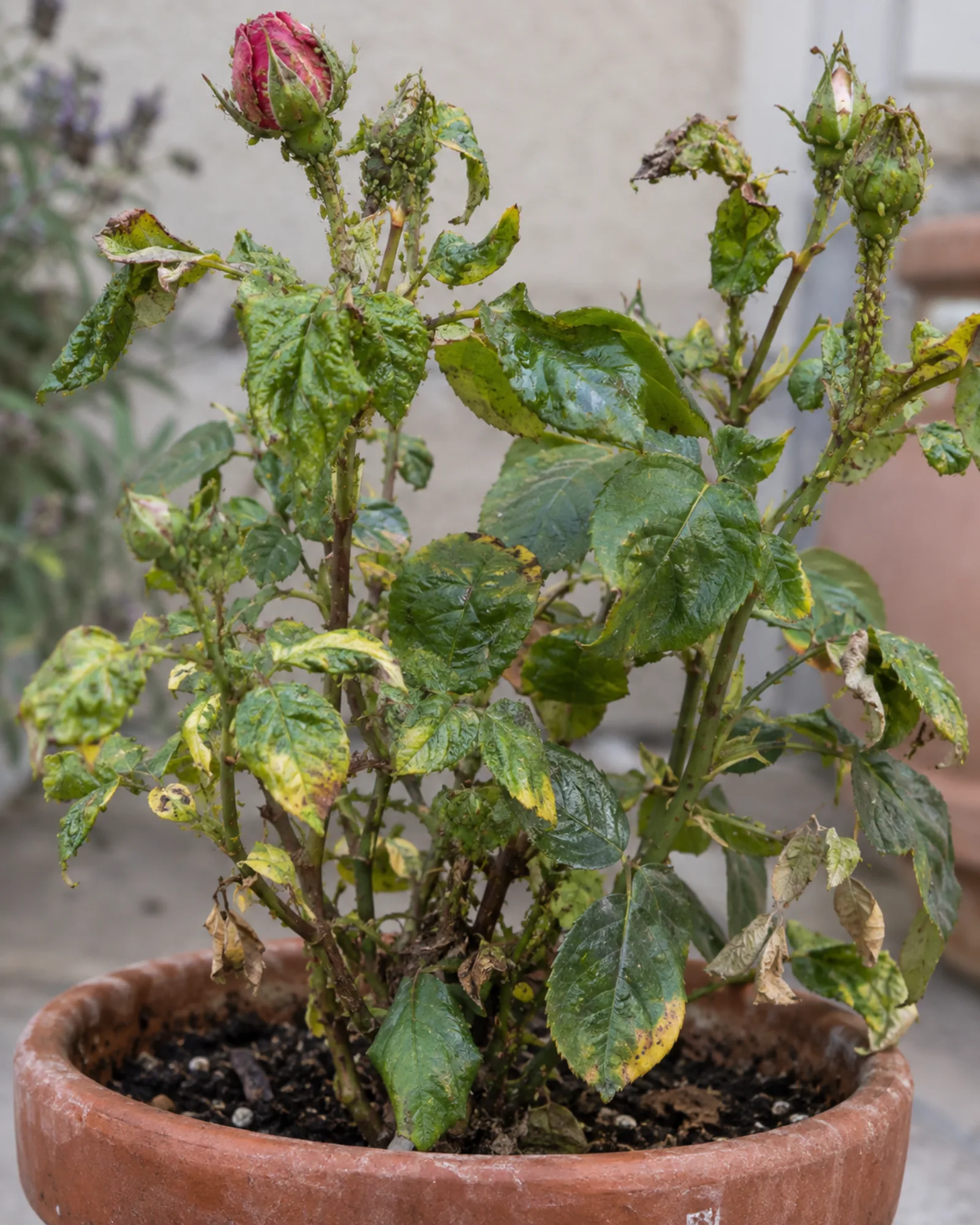
Diagnosis at a glance
Your rose has clusters of tiny insects packed onto its newest shoots and buds, and the growth around them is starting to curl. These are aphids, one of the most common rose pests and one of the most treatable. They are not a sign that your plant is doomed, and with a few simple steps you can clear them and keep them in check. Below is how to identify them, what makes them multiply so quickly, and the treatments and habits that genuinely work, from a gentle spray for a light case to a fast knockdown when a rose is covered.
What they look like and how to identify them
Aphids are small, soft-bodied, pear-shaped insects, usually somewhere between one and three millimetres long, so a single one is easy to miss but a group is not.1 On roses they are most often green, which blends in against a fresh shoot, but they can also be pink, black, grey or pale yellow depending on the type.13 The place to look is the softest, freshest tissue: the very tips of new shoots, the unopened flower buds, and the undersides of young leaves, where they gather in dense clusters and feed by sucking sap from the plant.24
Beyond the insects themselves, aphids leave a trail of tell-tale signs. As they feed on tender growth, the new leaves and shoot tips curl, pucker and distort, and buds may fail to open properly.25 They also excrete a sticky, sugary coating over the leaves and anything below them, which makes the surfaces shiny and tacky to the touch.14 A black, dusty sooty mould often grows on top of that coating, so leaves and stems can look grimy and dark, unlike the white, dusty bloom of rose powdery mildew.15 You may also spot small white flecks stuck to the leaves, which are the cast skins the insects shed as they grow, and when a group gets crowded, winged forms appear so they can fly off and start feeding elsewhere.1
One more clue is on the move around the plant. If you see ants running up and down the stems, look closer, because ants tend and protect aphids in order to harvest that sugary coating, and their patrols are often the first thing a gardener notices.16
Soft-bodied insects clustered on the newest shoots and buds, with curling tips and a sticky, shiny coating below, are aphids. Ants patrolling the stems are a strong hint they are already there.
What causes them and how they spread
The reason a few aphids become a heavy covering so quickly comes down to how they breed. Through the growing season, the females give birth to live young without needing to mate, and those young mature and start producing more of their own within about a week.16 That means a handful of insects on a single bud can build into a dense population across the whole plant in roughly one to two weeks, which is why roses seem to go from clean to covered almost overnight.1
Aphids feed only on soft, sappy tissue, so they concentrate on flushes of tender new growth. Anything that pushes a rose to produce a lot of that soft growth at once, such as heavy feeding with nitrogen fertiliser or generous watering, tends to make the problem worse, because it lays out exactly the kind of tissue they prefer.26 They are most active in the warm, mild stretch of spring and early summer, which is the same window when roses are throwing out their fastest new shoots.13
Spread happens in two ways. When a group gets crowded, or the growth it is on begins to harden, some aphids grow wings and fly off to settle on fresh plants, which is how a clean rose across the garden suddenly picks them up.1 And once ants find a fed-on rose, they actively defend the aphids from the ladybirds, lacewings and tiny wasps that would otherwise eat them, so an ant-tended plant can carry far more aphids than one left to its natural predators.16 Getting the ants off the plant is often half the battle.
Confirm it, and get a plan that fits
The signs above are usually enough to recognise aphids by eye. If you would rather be certain, or you want a treatment matched to your rose and to how far things have gone, the CureMyPlants app can do that for you. It takes a photo and turns it into a plan in about a minute, and it does not need you to know the plant's name to diagnose the problem. That name only personalises the plan afterwards. Here is how it works.
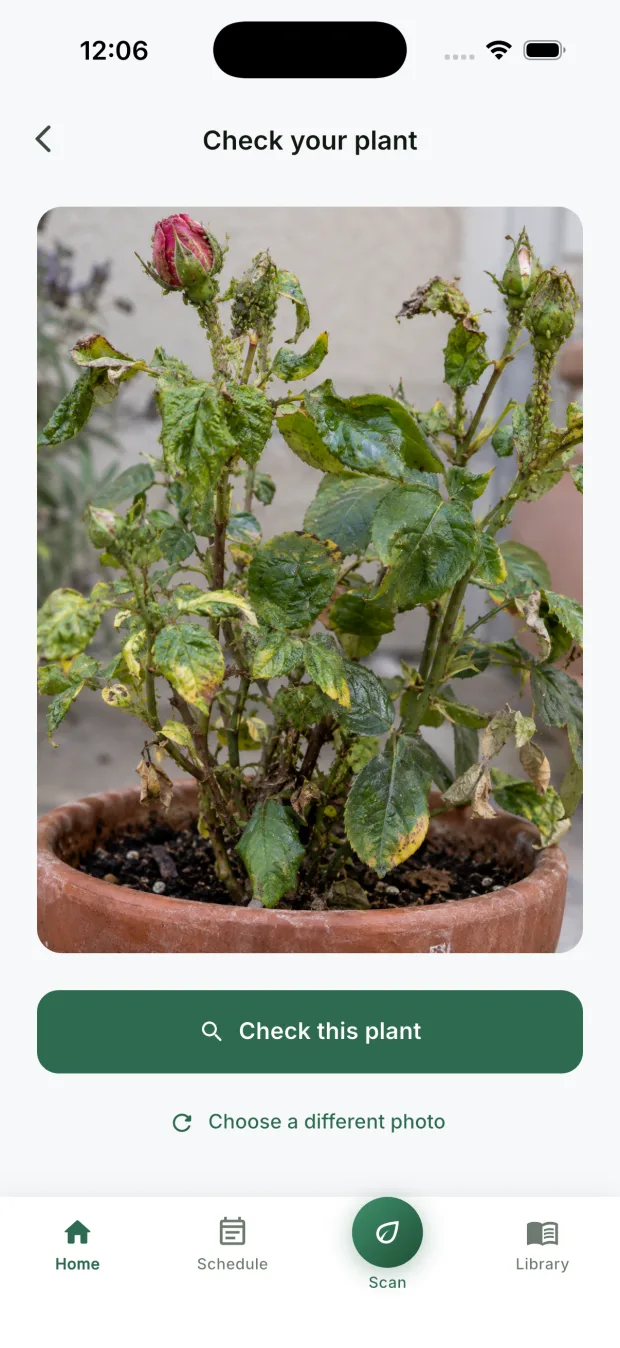
1 Snap your photo
You take one photo of the affected growth
No jargon and no plant Latin to learn first.
- One clear, close-up shot of the clustered shoot tips or buds is all it needs.
- You do not have to name the rose, or even know it is a rose, to get a diagnosis.
- Tap to check, and the app takes it from there.
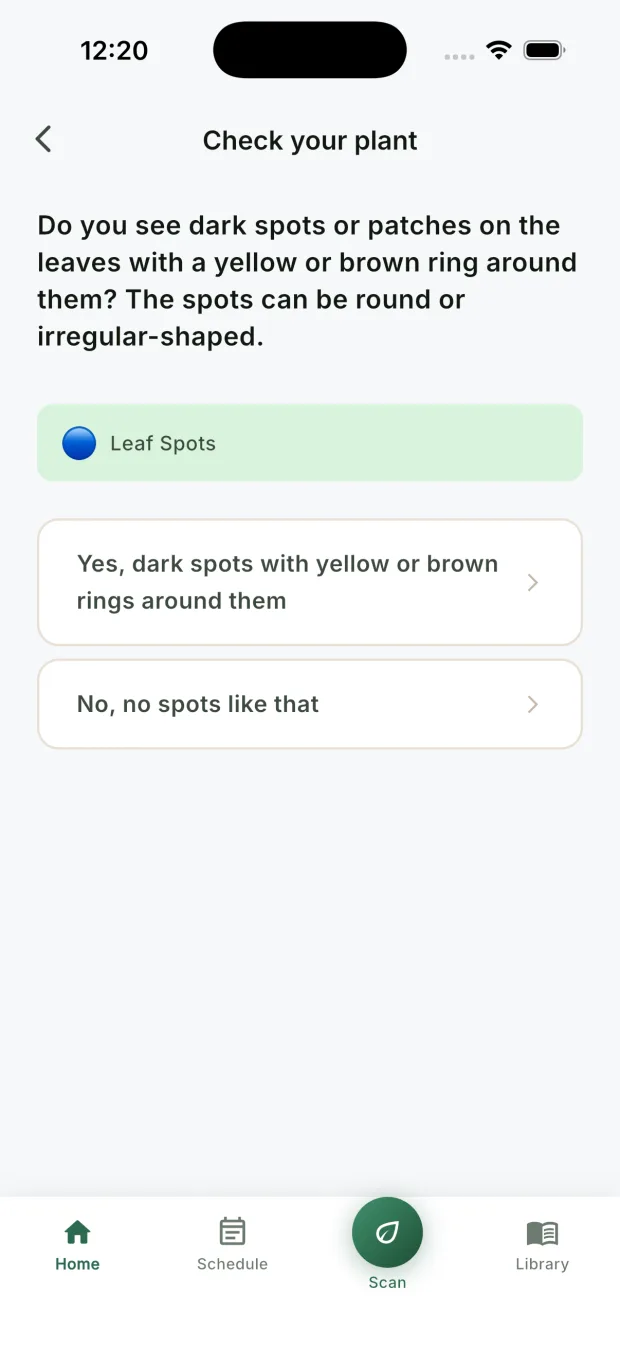
2 Answer what you see
It asks a plain yes or no question
Everyday words, not a botany quiz.
- It asks about what you can actually see, like whether the tips are curling or sticky.
- The questions are short and in plain English, so you are never left guessing.
- Your answers help it tell aphids apart from look-alike problems.
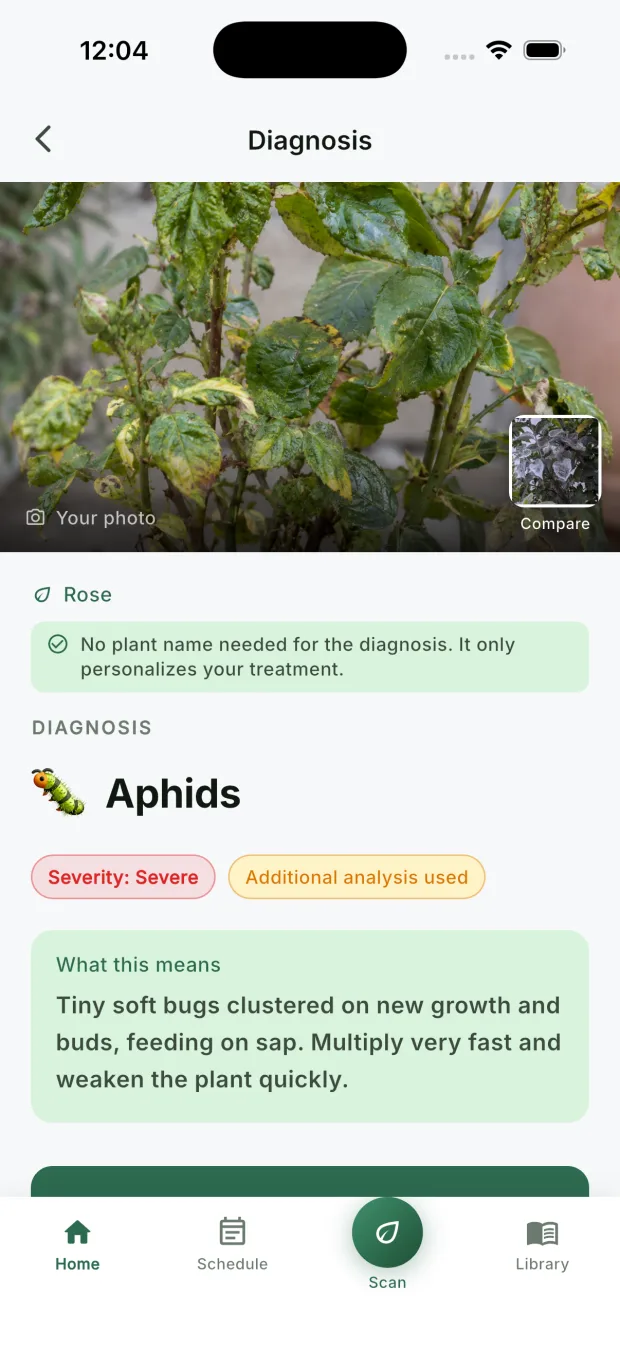
3 See the answer
The diagnosis lands on your own photo
Your own plant, named and explained.
- The diagnosis in plain terms (aphids), marked on the photo you took.
- A severity read, from mild to severe, so you know how urgent it is.
- A short, plain-English note on what it means for the plant.
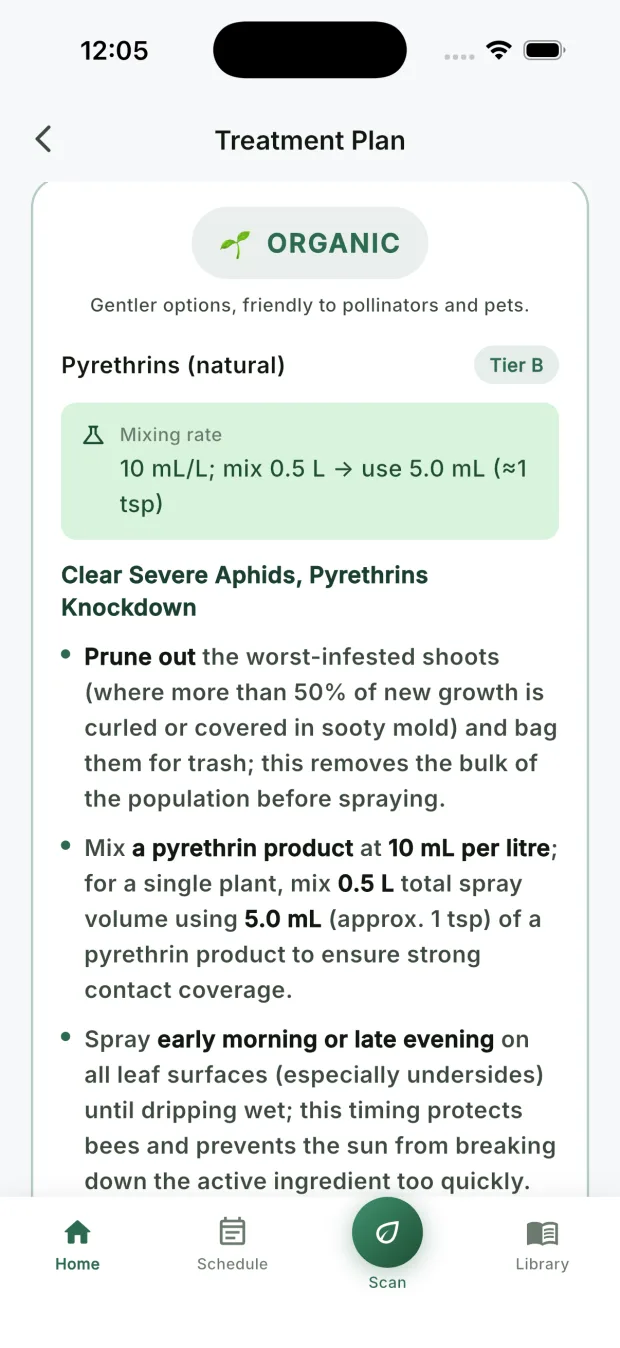
4 Get the plan
A plan scaled to your case
The exact product, the exact mix, the steps in order.
- For a severe case like this one, it opens with a fast organic knockdown, pyrethrins.
- It gives the precise mixing rate, so there is no guesswork with the bottle.
- The steps are laid out in order, including when and how often to reapply.
5 Why the plan changes
The same pest, a different plan depending on how far it has gone
Aphids are aphids, but a light dusting on one bud and a rose covered top to bottom call for different responses. The app scales the plan to the severity it reads from your photo, so you are not reaching for a strong spray when a rinse would do, or a rinse when the plant needs more.
The treatment ladder, from mild to severe
Start at the gentlest step that fits, and only climb the ladder if you need to. This is the same logic the app uses.
Mild: rinse and soap
- Knock them off with water. A firm jet of water aimed at the clustered shoots and leaf undersides physically dislodges most of the aphids, and once knocked to the ground the soft-bodied insects largely fail to climb back.16 Repeat every couple of days and it alone can control a light case.
- Insecticidal soap. This is a contact spray that works only on the insects it actually wets, and it leaves no lasting residue, so it is gentle on the plant and on beneficial insects that arrive later.1 A typical rate is about 15 mL per litre of water, roughly one and a half teaspoons in half a litre, sprayed to cover both the tops and undersides of the leaves. Reapply every four to seven days while aphids are present, and avoid spraying in direct sun or above about 90F, which can mark the foliage.
Moderate: oils and neem
- Horticultural oil. A light oil spray smothers aphids and their eggs on contact, so thorough coverage is what matters.1 Apply every seven to fourteen days, keep it off open flowers, and, as with soap, avoid hot, sunny conditions. Rotating an oil with insecticidal soap gives you two gentle tools working in slightly different ways.
- Neem. Neem acts both as a contact spray and as a growth regulator that interferes with young aphids as they develop, so it works more slowly than a straight knockdown but keeps pressure on the next generation.1 Spray every seven to fourteen days, covering both leaf surfaces, and again keep it off open blooms and out of the midday heat.
Severe: a fast knockdown, and a last resort
- Prune first. When a rose is heavily covered, cut off the worst-affected shoot tips and buds and bag them, which removes a large share of the population in one go and lets any spray reach what is left.5
- Pyrethrins. For a fast organic knockdown on a bad case, pyrethrins act quickly on contact. A typical rate is about 10 mL per litre, roughly one teaspoon in half a litre. Because pyrethrins are highly hazardous to bees, apply only in the very early morning or late evening when pollinators are not active, and never onto open flowers.16
- A soil drench, only as a last resort. On a rose that is not in bloom and not about to be, a soil drench of imidacloprid is taken up by the roots and moves inside the plant, so aphids feeding on the sap are affected.1 Keep this for cases the gentler steps have not held, and read the pollinator caution below before you reach for it.
Imidacloprid belongs to a group of insecticides that move into a plant's pollen and nectar, so a treated rose can carry the chemical into its flowers where bees feed.1 Never use it on a plant that is blooming or about to bloom, and think hard before using it on a rose grown for its flowers at all. Always follow the product label.
Whichever rung you are on, work with the natural helpers rather than against them. Ladybirds (ladybugs), lacewings and tiny parasitic wasps eat large numbers of aphids on their own, and the gentle sprays above spare them while the harsher ones do not, which is another reason to start low on the ladder.16 And because ants defend aphids from exactly those predators, keeping ants off the canes, by clearing their trails or banding the base of the plant, lets the good insects do their work.1
Recommended products
Bonide Insecticidal Soap, 32 oz Ready-to-Use
A gentle contact spray for a light or early case. It works only where it wets the insects and leaves no lasting residue, so it is kind to bees and to the predators that arrive later. Cover both leaf surfaces and reapply every few days while aphids are present.
View on AmazonMonterey Horticultural Oil, 16 oz Concentrate
A light oil that smothers aphids and their eggs on contact, so thorough coverage matters. Apply every one to two weeks, keep it off open flowers, and avoid hot, sunny conditions. Rotate it with the soap for two gentle tools that work in different ways.
View on AmazonGarden Safe Neem Oil Extract Concentrate, 10 oz
Works as both a contact spray and a growth regulator on young aphids, so it acts more slowly but keeps pressure on the next generation. Spray both leaf surfaces every one to two weeks, keep it off open blooms, and stay out of the midday heat.
View on AmazonMGK EverGreen Pyrethrum Concentrate, 16 oz (OMRI)
A fast-acting organic knockdown for a heavily covered rose. Prune off the worst tips first, then apply only in the very early morning or late evening, because pyrethrins are highly hazardous to bees, and never onto open flowers. Follow the label rate.
View on AmazonFertilome Tree & Shrub Systemic Drench, 1 gal
A soil drench taken up by the roots that moves inside the plant, for stubborn cases the gentler steps have not held. Because it moves into pollen and nectar, never use it on a rose that is blooming or about to bloom. Keep it as a genuine last resort and follow the label.
View on AmazonAs an Amazon Associate, CureMyPlants earns from qualifying purchases. The links above are affiliate links, so if you buy through them we may earn a small commission at no extra cost to you. We only recommend products we would use on our own plants.
How to prevent them coming back
- Check the new growth often. Aphids always start on the softest, freshest tips and buds, so a quick weekly look there catches them while a firm rinse is still all you need. Early is easy.26
- Go easy on the nitrogen. Heavy feeding pushes out a flush of the soft, sappy growth aphids love most, so feed roses steadily rather than in big hits, and do not overwater.26
- Protect the predators. Ladybirds, lacewings and small parasitic wasps clear a lot of aphids for free, so avoid broad, harsh sprays that wipe them out and reach for the gentle options first.16
- Deal with the ants. Since ants defend aphids from those predators, clearing their trails or banding the base of the plant to keep them off the canes lets the natural controls take over.1
- Rinse and tidy. A firm spray of water every few days during the warm spring flush knocks pioneers off before they build up, and pinching out a badly covered tip removes a lot of insects at once.15
Not sure what your plant has?
Snap a photo and get a clear diagnosis with a step-by-step treatment plan, free on iPhone and Android.
Diagnose my plantRelated guides
References
- UC Statewide IPM Program (UC IPM). Aphids, Pest Notes Publication 7404. University of California ANR. ipm.ucanr.edu
- UC Statewide IPM Program (UC IPM). Roses in the Garden and Landscape: Insects and Mites, Aphids. ipm.ucanr.edu
- Royal Horticultural Society. Aphids. rhs.org.uk
- Missouri Botanical Garden. Aphids, Plant Finder Pests and Problems. missouribotanicalgarden.org
- Clemson Cooperative Extension, Home & Garden Information Center. Rose Insects & Related Pests. hgic.clemson.edu
- Colorado State University Extension. Aphids on Shade Trees and Ornamentals, Fact Sheet 5.511. extension.colostate.edu